
EXPONATUL LUNII IULIE 2026. Memoria păstrată în lut: amforă de masă din Tomisul antic
Frumusețea unui artefact nu se regăsește doar în forma sau în rafinamentul său, ci și în drumul pe care l-a străbătut până la noi. Îngropat vreme de milenii sub străzile Constanței de astăzi, el păstrează ecoul unor gesturi, al unui ritual și, mai ales, amintirea oamenilor care l-au folosit cândva. Astfel, fiecare piesă arheologică devine o punte între trecut și prezent, oferind șansa de a înțelege viața de zi cu zi, credințele și practicile funerare ale locuitorilor anticului Tomis.
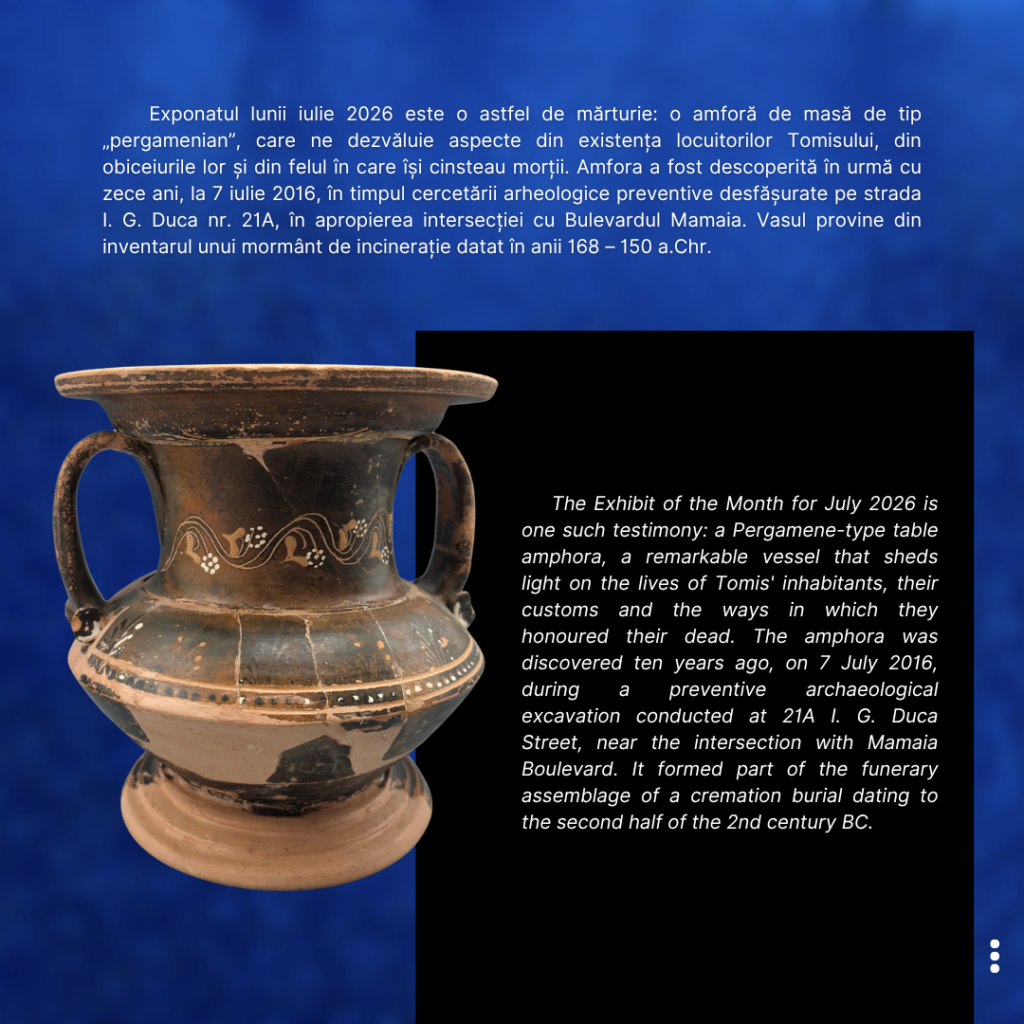
Exponatul lunii iulie 2026 este o astfel de mărturie: o amforă de masă de tip „pergamenian”, care ne dezvăluie aspecte din existența locuitorilor Tomisului, din obiceiurile lor și din felul în care își cinsteau morții. Amfora a fost descoperită în urmă cu zece ani, la 7 iulie 2016, în timpul cercetării arheologice preventive desfășurate pe strada I. G. Duca nr. 21A, în apropierea intersecției cu Bulevardul Mamaia. Vasul provine din inventarul unui mormânt de incinerație datat în anii 168 – 150 a.Chr.
Depunerea lui în mormânt nu pare să fi fost întâmplătoare. În antichitatea greco-romană, vinul ocupa un loc important atât în viața cotidiană, cât și în practicile funerare. Vechii greci considerau consumul de vin drept un semn de civilizație deoarece producerea vinului presupunea practicarea agriculturii. Banchetul (symposion) însemna un consum ritualizat al vinului : unul dintre participanți, deobicei gazda, era symposiarh, adică avea inclusiv dreptul de a stabili cantitatea de băutură pe care o primea fiecare mesean, deoarece beția nu era îngăduită. Și tot pentru evitarea excesului, vinul, care în antichitate era mult mai tare decât cel de azi, nu era consumat neîndoit cu apă. Iar pentru amestecarea vinului cu apă, în antichitate se foloseau vase numite cratere sau amfore de masă. Exemplarul pe care îl prezentăm a fost depus în mormânt împreună cu un ansamblu de obiecte destinate servirii vinului : trei ulcioare tip lagynos, un bol cu decor în relief și un polonic din bronz. Este cunoscut din mărturiile scrise păstrate din antichitate obiceiul stingerii tăciunilor rugului funerar cu vin, cheie în care s-ar putea explica prezența acestor obiecte laolaltă cu cenușa celui îngropat acolo.
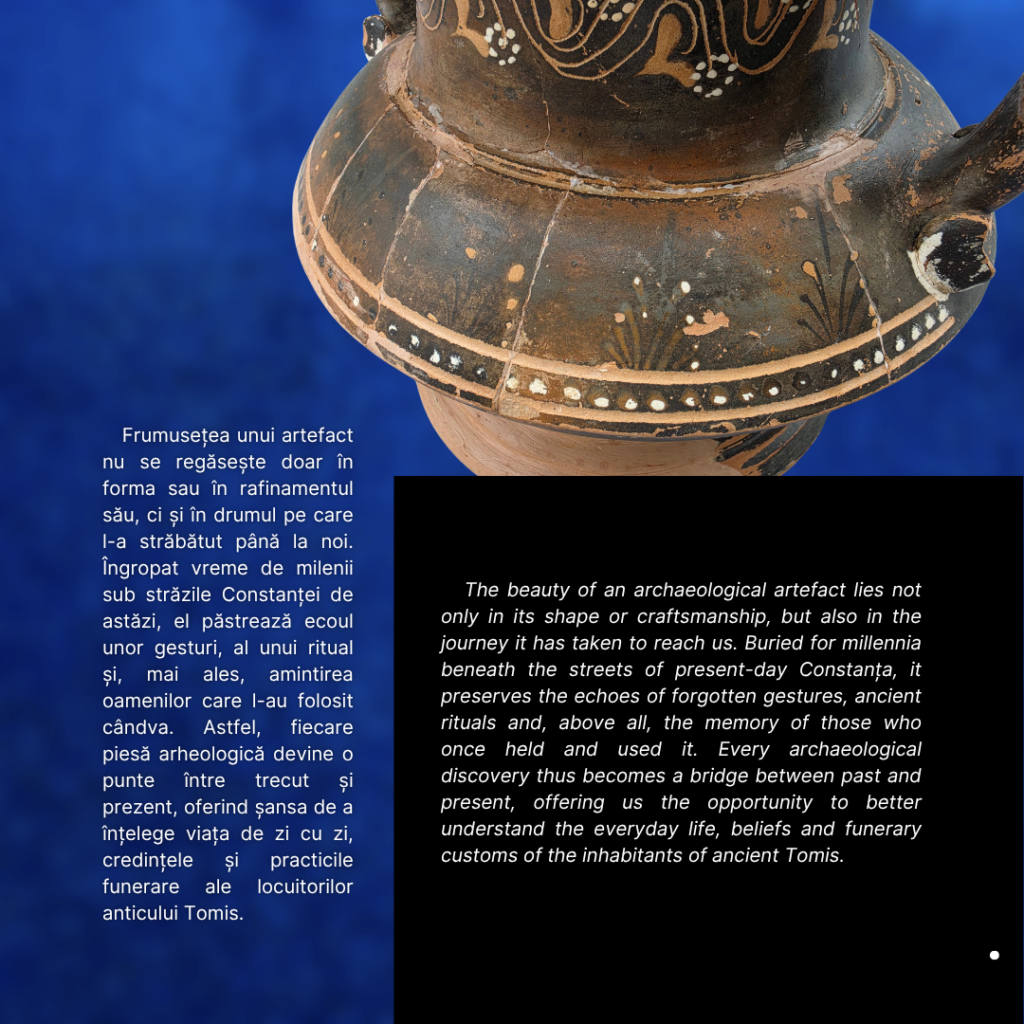
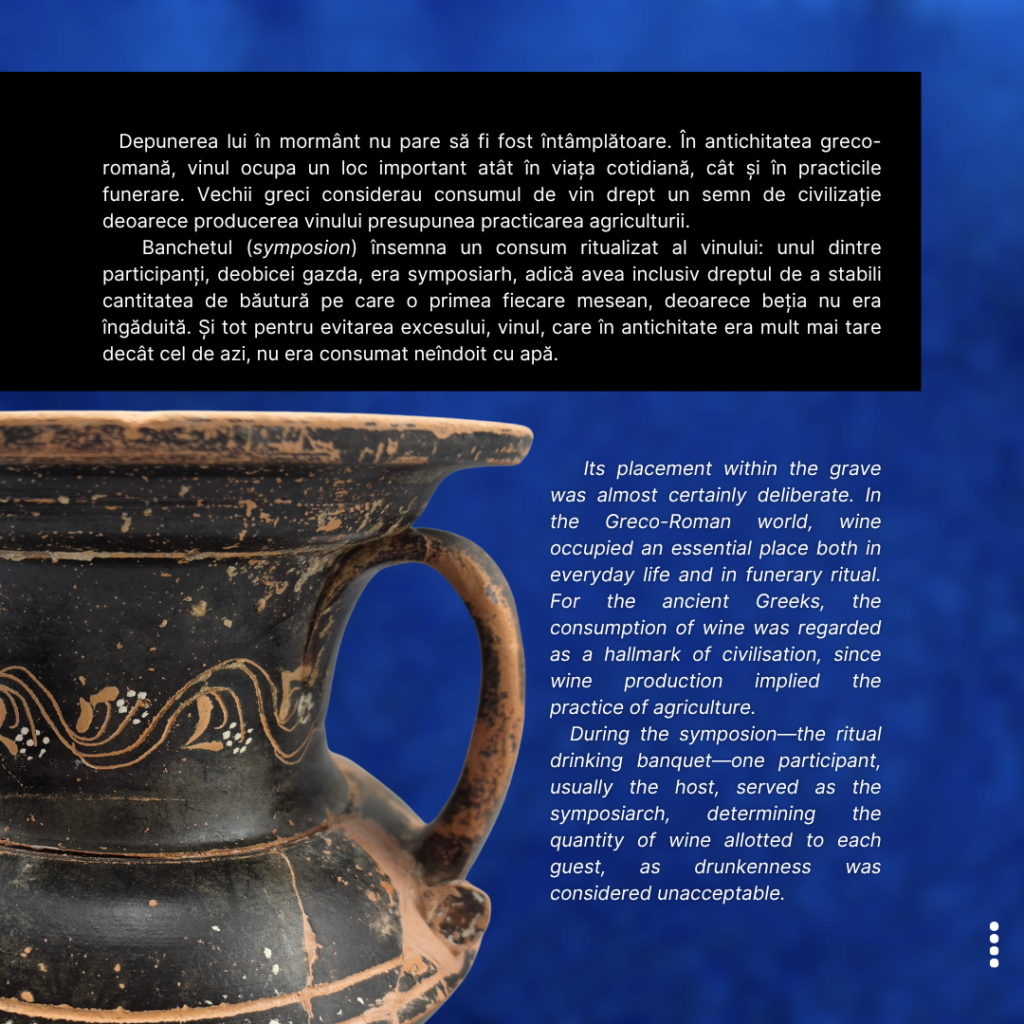
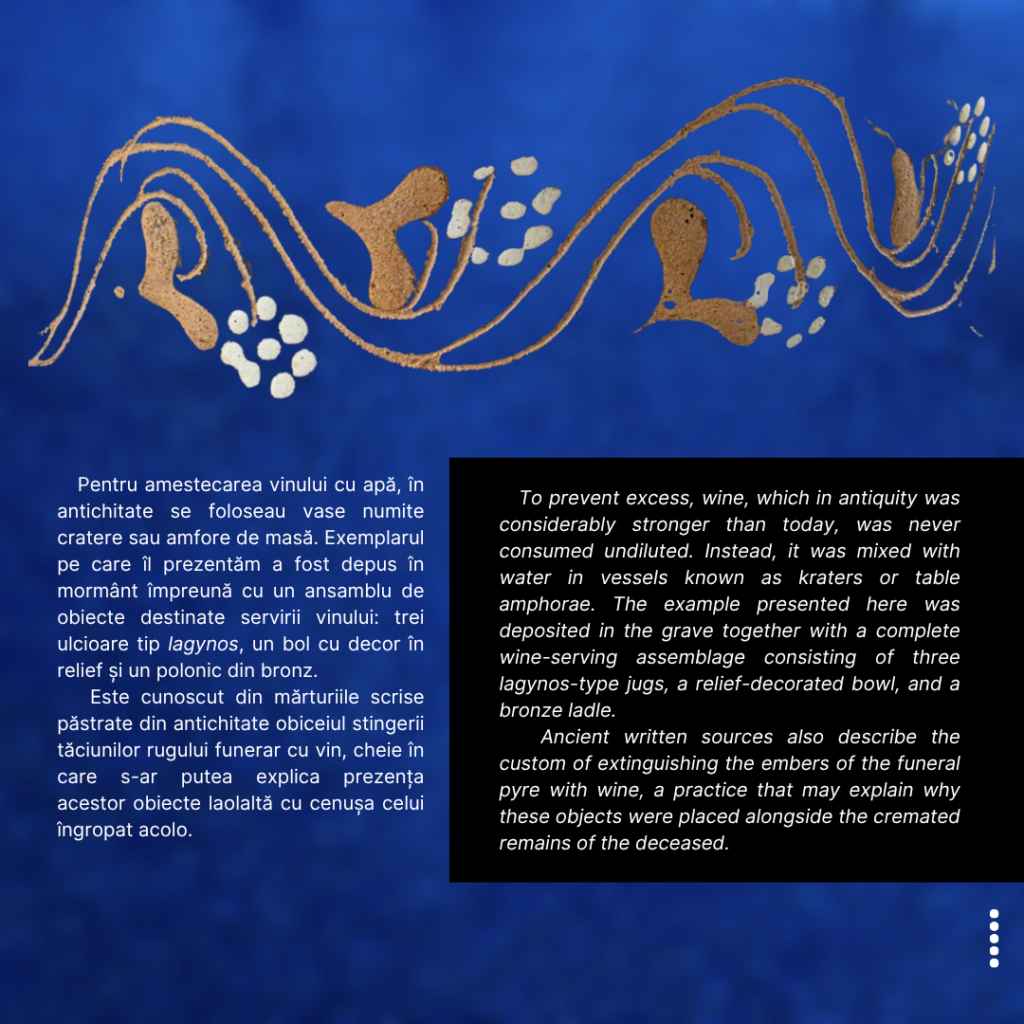
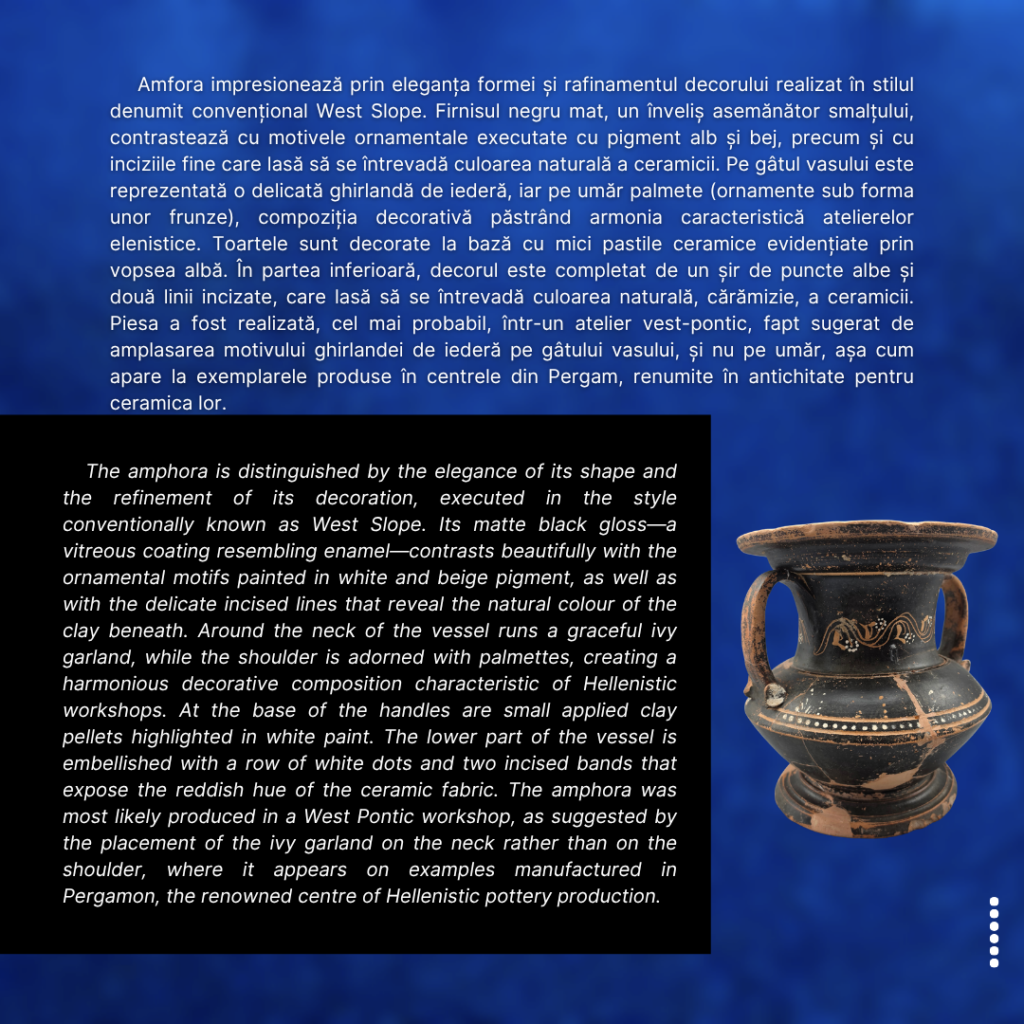
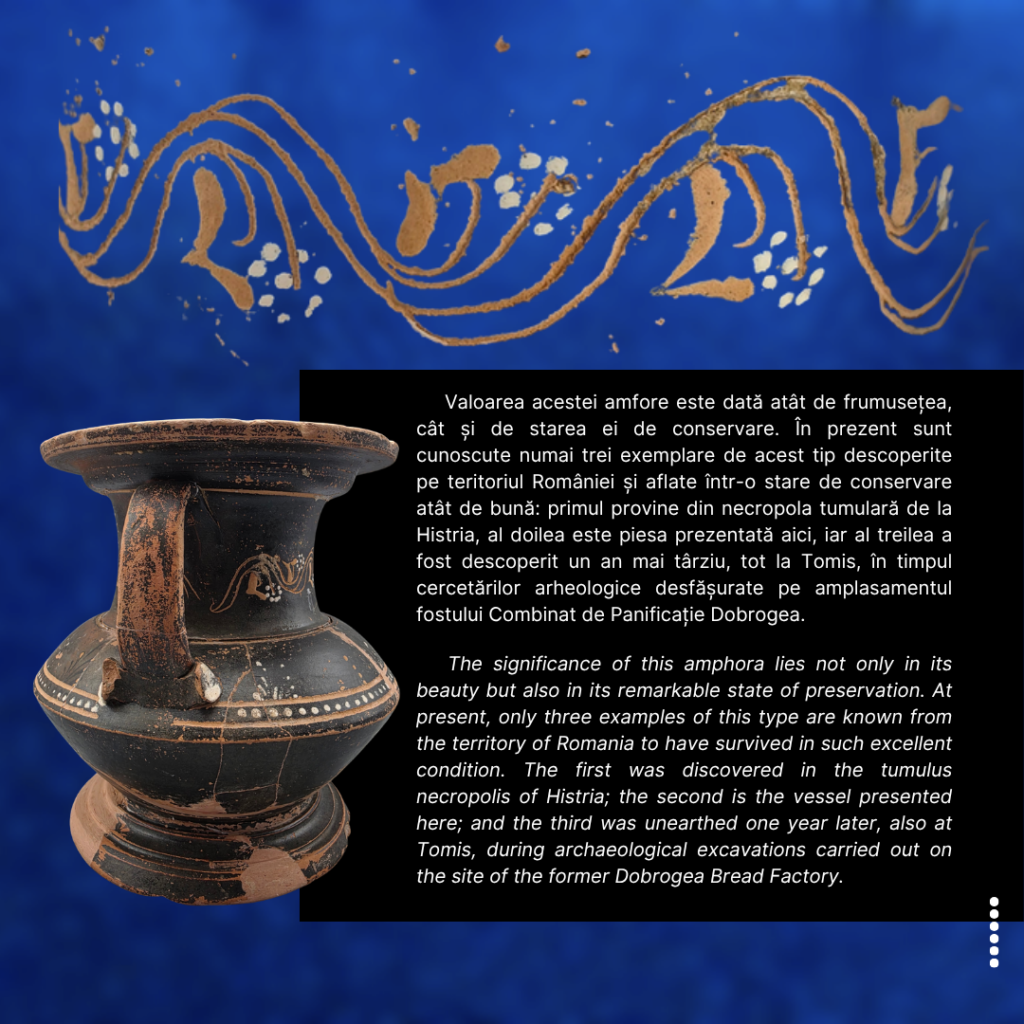
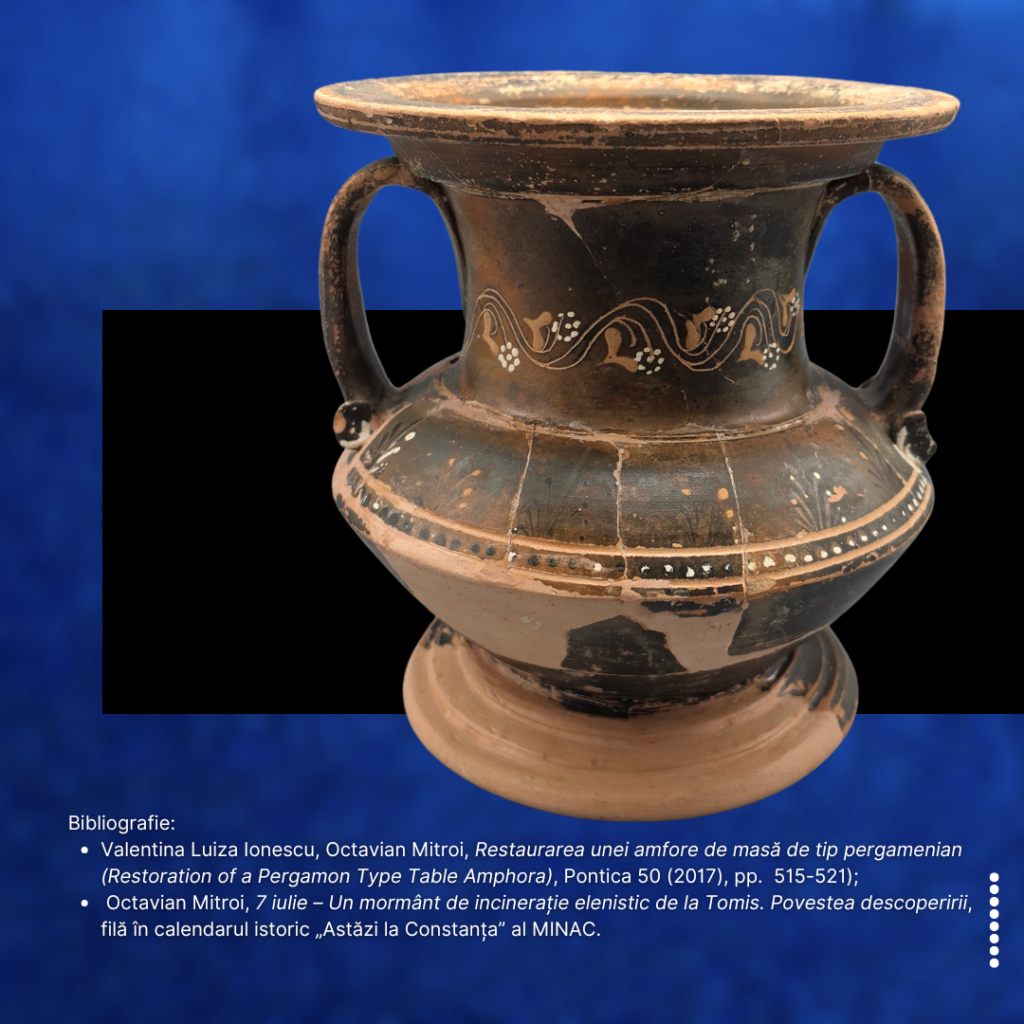
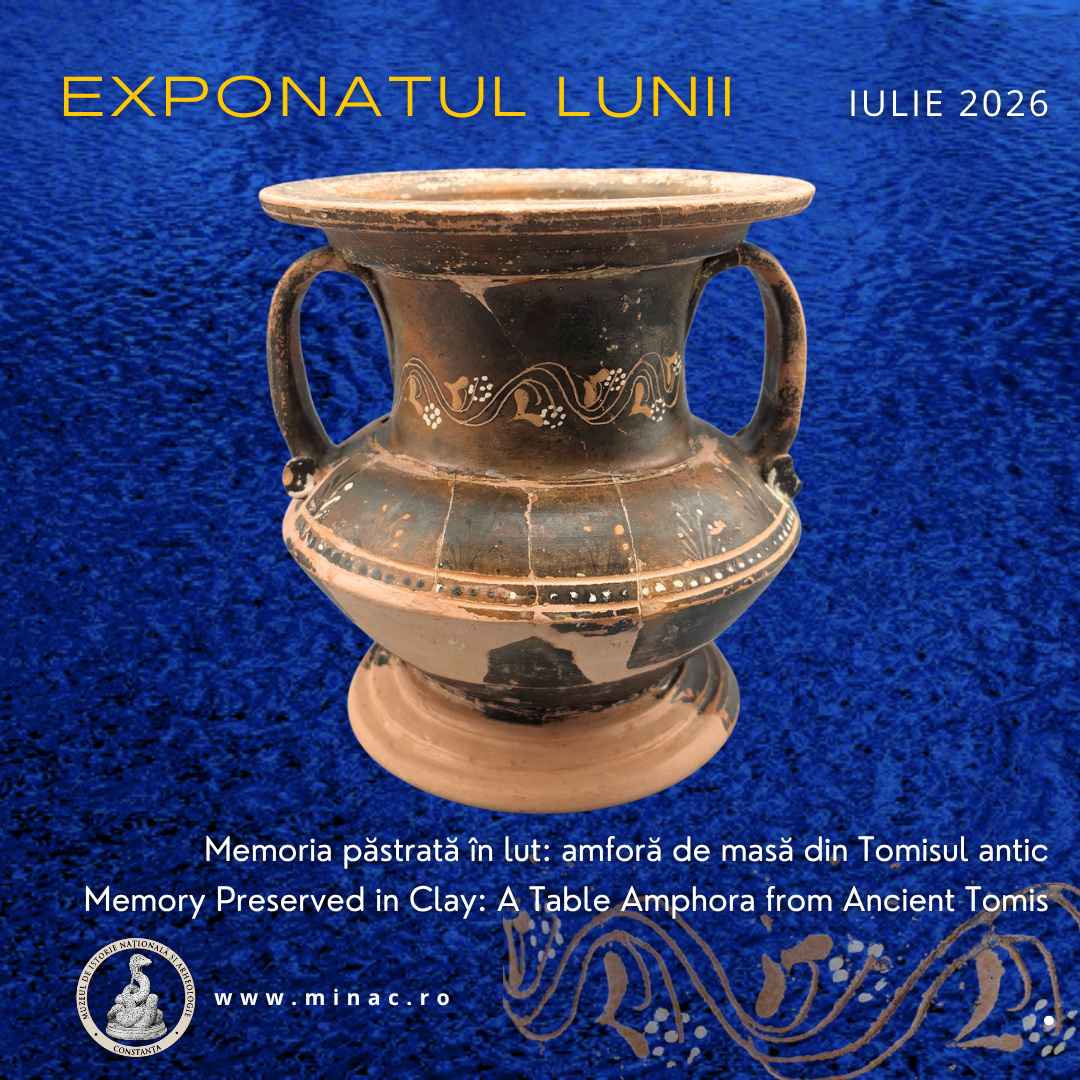
Amfora impresionează prin eleganța formei și rafinamentul decorului realizat în stilul denumit convențional West Slope. Firnisul negru mat, un înveliș asemănător smalțului, contrastează cu motivele ornamentale executate cu pigment alb și bej, precum și cu inciziile fine care lasă să se întrevadă culoarea naturală a ceramicii. Pe gâtul vasului este reprezentată o delicată ghirlandă de iederă, iar pe umăr palmete (ornamente sub forma unor frunze), compoziția decorativă păstrând armonia caracteristică atelierelor elenistice. Toartele sunt decorate la bază cu mici pastile ceramice evidențiate prin vopsea albă. În partea inferioară, decorul este completat de un șir de puncte albe și două linii incizate, care lasă să se întrevadă culoarea naturală, cărămizie, a ceramicii. Piesa a fost realizată, cel mai probabil, într-un atelier vest-pontic, fapt sugerat de amplasarea motivului ghirlandei de iederă pe gâtului vasului, și nu pe umăr, așa cum apare la exemplarele produse în centrele din Pergam, renumite în antichitate pentru ceramica lor.
Valoarea acestei amfore este dată atât de frumusețea, cât și de starea ei de conservare. În prezent sunt cunoscute numai trei exemplare de acest tip descoperite pe teritoriul României și aflate într-o stare de conservare atât de bună: primul provine din necropola tumulară de la Histria, al doilea este piesa prezentată aici, iar al treilea a fost descoperit un an mai târziu, tot la Tomis, în timpul cercetărilor arheologice desfășurate pe amplasamentul fostului Combinat de Panificație Dobrogea.
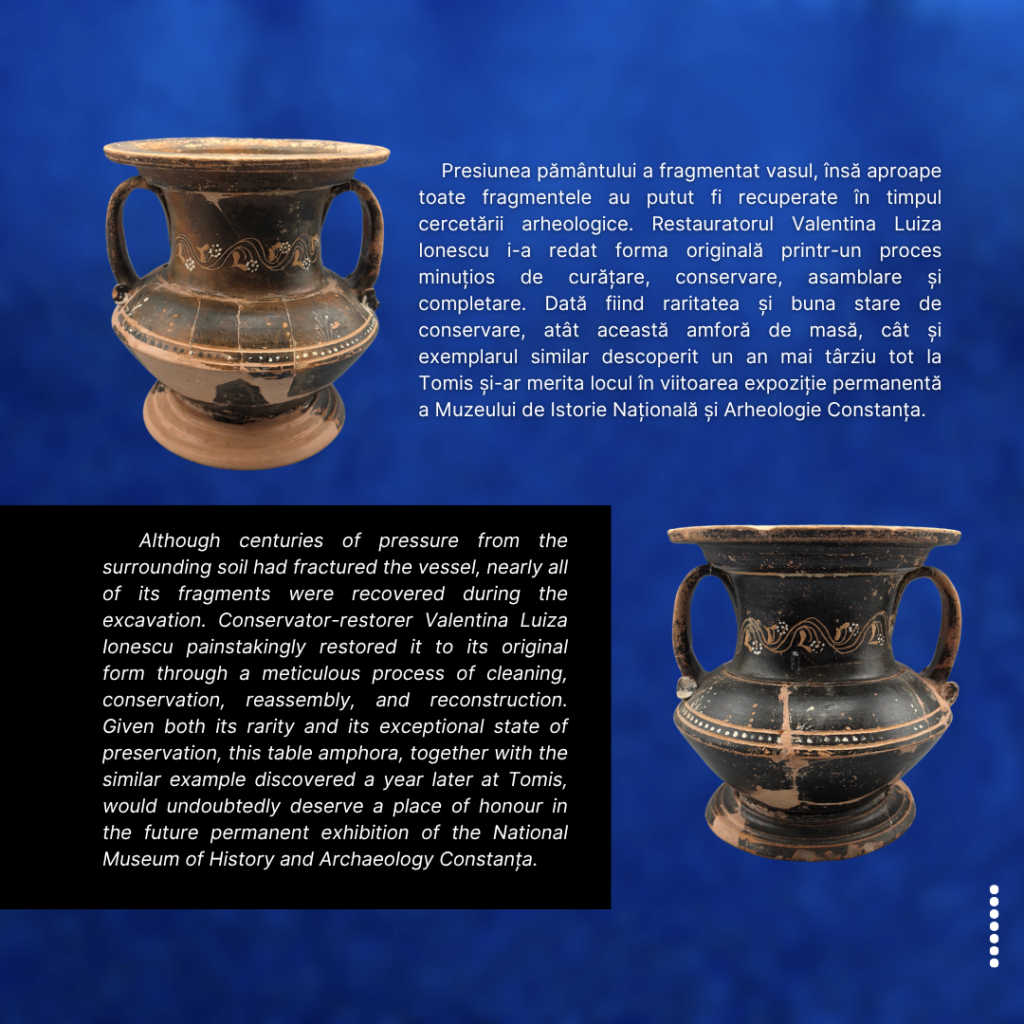
Presiunea pământului a fragmentat vasul, însă aproape toate fragmentele au putut fi recuperate în timpul cercetării arheologice. Restauratorul Valentina Luiza Ionescu i-a redat forma originală printr-un proces minuțios de curățare, conservare, asamblare și completare. Dată fiind raritatea și buna stare de conservare, atât această amforă de masă, cât și exemplarul similar descoperit un an mai târziu tot la Tomis și-ar merita locul în viitoarea expoziție permanentă a Muzeului de Istorie Națională și Arheologie Constanța.
Memory Preserved in Clay: A Table Amphora from Ancient Tomis
The beauty of an archaeological artefact lies not only in its form or craftsmanship, but also in the journey it has travelled to reach us. Buried for millennia beneath the streets of present-day Constanța, it preserves the echo of long-forgotten gestures, of ritual practices, and above all, the memory of the people who once used it. In this way, every archaeological object becomes a bridge between past and present, offering us the opportunity to better understand the daily life, beliefs, and funerary customs of the inhabitants of ancient Tomis.
The Museum’s Exhibit of the Month for July 2026 is one such testimony: a Pergamene-type table amphora, which offers a glimpse into the lives of the people of Tomis, their customs, and the ways in which they honoured their dead. The amphora was discovered ten years ago, on 7 July 2016, during a preventive archaeological excavation conducted at 21A I. G. Duca Street, near its intersection with Mamaia Boulevard. The vessel formed part of the grave goods of a cremation burial dated to 168–150 BC.
Its placement within the grave was almost certainly deliberate. In the Greco-Roman world, wine occupied an essential place both in everyday life and in funerary ritual. For the ancient Greeks, the consumption of wine was regarded as a hallmark of civilisation, since wine production implied the practice of agriculture. During the symposion – the ritual drinking banquet – one participant, usually the host, served as the symposiarch, determining the quantity of wine allotted to each guest, as drunkenness was considered unacceptable. To prevent excess, wine, which in antiquity was considerably stronger than today, was never consumed undiluted. Instead, it was mixed with water in vessels known as kraters or table amphorae. The example presented here was deposited in the grave together with a complete wine-serving assemblage consisting of three lagynos-type jugs, a relief-decorated bowl, and a bronze ladle. Ancient written sources also describe the custom of extinguishing the embers of the funeral pyre with wine, a practice that may explain why these objects were placed alongside the cremated remains of the deceased.
The amphora is distinguished by the elegance of its shape and the refinement of its decoration, executed in the style conventionally known as West Slope. Its matte black gloss—a vitreous coating resembling enamel—contrasts beautifully with the ornamental motifs painted in white and beige pigment and with the delicate incised lines that reveal the natural colour of the clay beneath. Around the neck of the vessel runs a graceful ivy garland, while the shoulder is adorned with palmettes, creating a harmonious decorative composition characteristic of Hellenistic workshops. At the base of the handles are small applied clay pellets highlighted in white paint. The lower part of the vessel is embellished with a row of white dots and two incised bands that expose the reddish hue of the ceramic fabric. The amphora was most likely produced in a West Pontic workshop, as suggested by the placement of the ivy garland on the neck rather than on the shoulder, where it appears on examples manufactured in Pergamon, the renowned centre of Hellenistic pottery production.
The significance of this amphora lies not only in its beauty but also in its remarkable state of preservation. At present, only three examples of this type are known from the territory of Romania to have survived in such excellent condition. The first was discovered in the tumulus necropolis of Histria; the second is the vessel presented here; and the third was unearthed one year later, also at Tomis, during archaeological excavations carried out on the site of the former Dobrogea Bread Factory.
Although centuries of pressure from the surrounding soil had fractured the vessel, nearly all of its fragments were recovered during the excavation. Conservator-restorer Valentina Luiza Ionescu painstakingly restored it to its original form through a meticulous process of cleaning, conservation, reassembly, and reconstruction. Given both its rarity and its exceptional state of preservation, this table amphora, together with the similar example discovered a year later at Tomis, would undoubtedly deserve a place of honour in the future permanent exhibition of the National Museum of History and Archaeology Constanța.
***
Exponatul lunii iulie 2026 poate fi admirat în format fizic la sediul muzeului din strada Arhiepiscopiei nr. 7, municipiul Constanța, începând de joi, 16 iulie 2026, timp de o lună.
Bibliografie:
Valentina Luiza Ionescu, Octavian Mitroi, Restaurarea unei amfore de masă de tip pergamenian (Restoration of a Pergamon Type Table Amphora), Pontica 50 (2017), p 515-521);
Octavian Mitroi, 7 iulie – Un mormânt de incinerație elenistic de la Tomis. Povestea descoperirii, filă în calendarul istoric „Astăzi la Constanța” al MINAC.