Archaeological Park
The archaeological park was established in 1959 along the Roman-Byzantine enclosure wall, built in the 4th century AD, functional until the 6th, with the necessary repairs and additions.
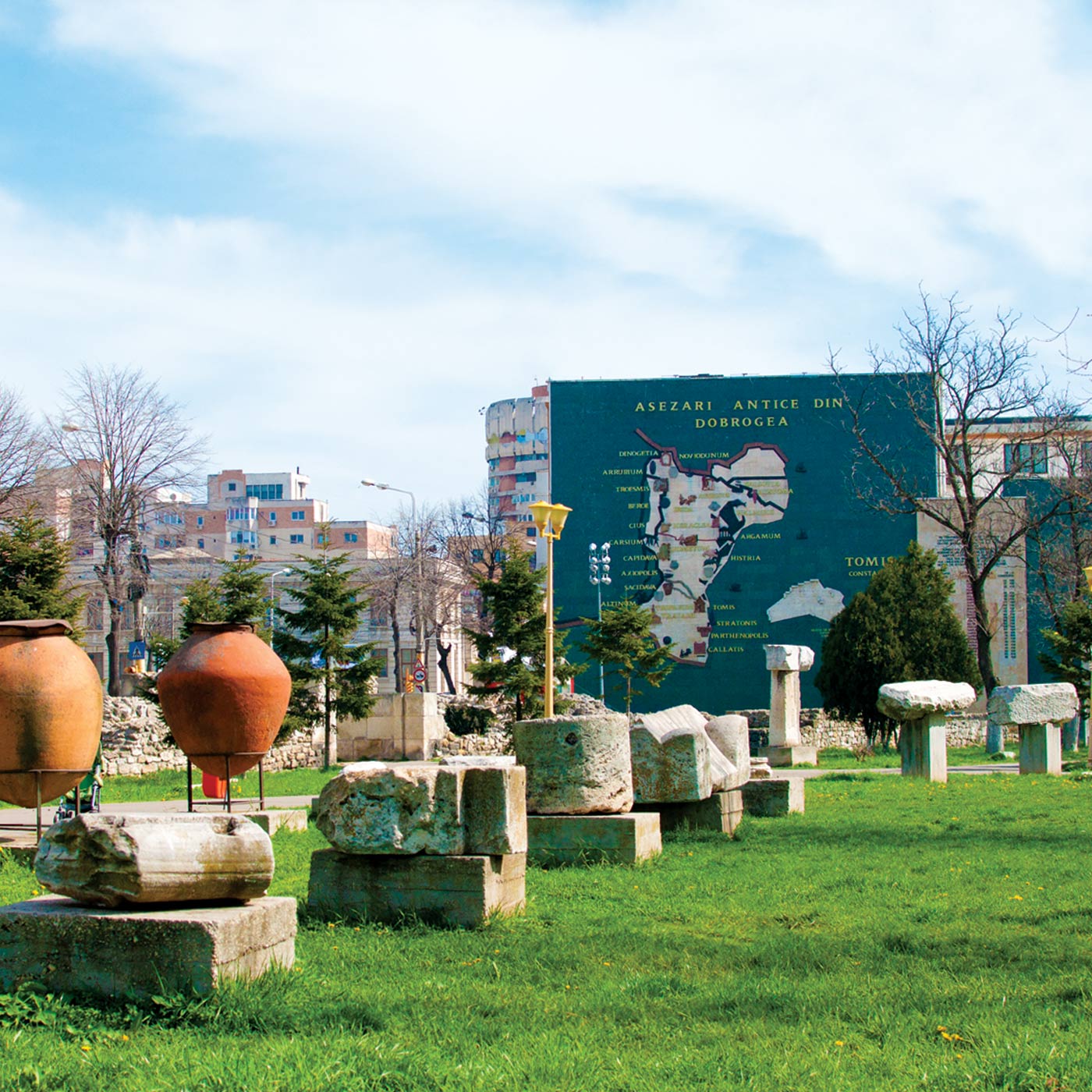
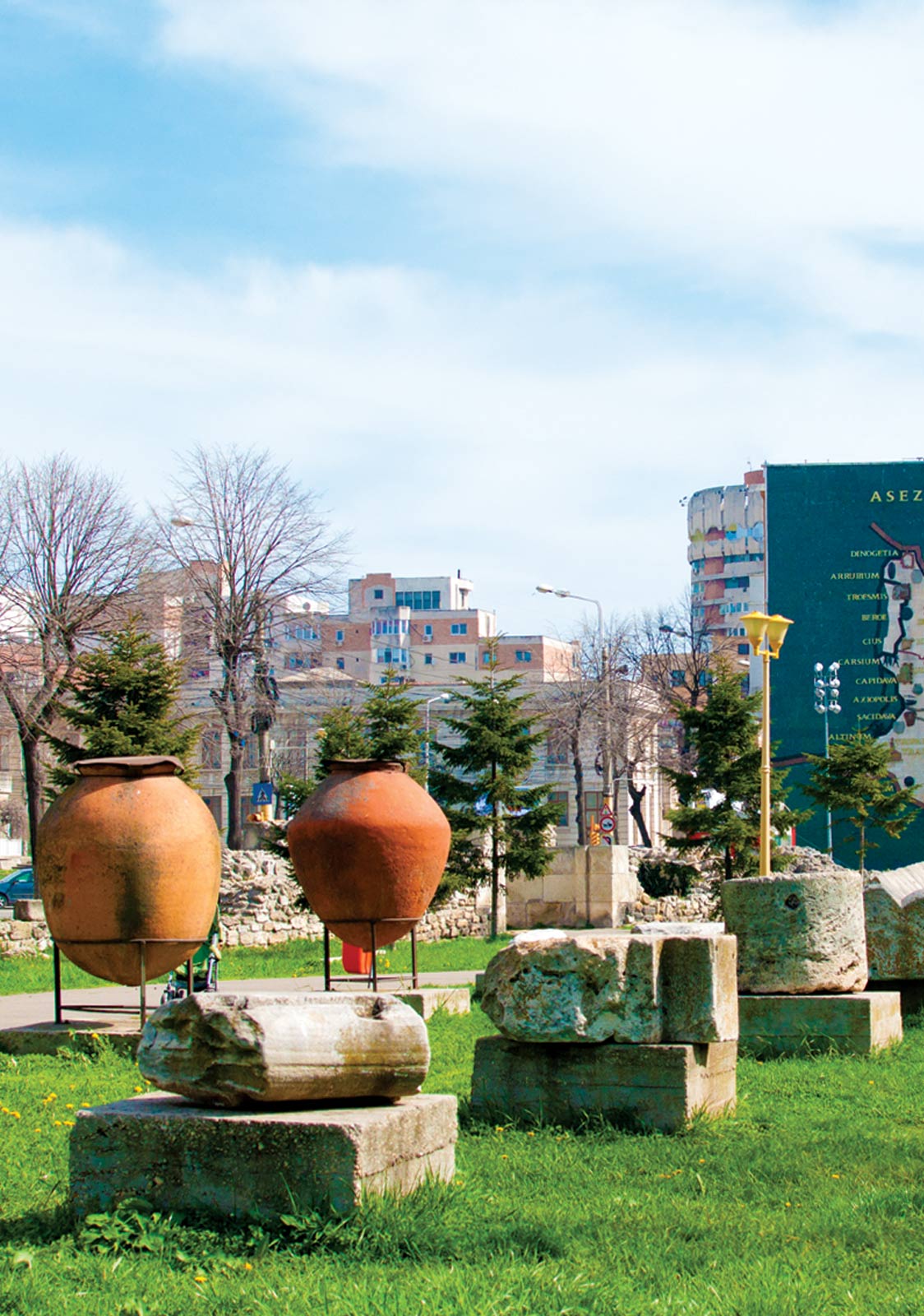
After two years of research and restoration of the monument in the form we see today, the space between it and Traian Street was designed and arranged as an open-air museum. The large pieces from the heritage of the Regional Museum of Dobrogea – architectural fragments, large-sized supply vessels (chiupuri) – over 65 in number, were exhibited along the park’s alleys, on specially arranged pedestals. Fragments of architraves, pediments, entablatures, columns, altars, funerary steles, sarcophagi, but also entire chiupuri, welcome visitors along the alleys and in specially arranged places on the grassy areas.
We recall here the fragment of a marble entablature discovered, along with other architectural fragments, in the so-called "marble workshop", during research carried out in the late 1950s, near entrance no. 3 to the modern port. The unfinished piece was abandoned while it was still being finished. In the Greco-Roman period, large architectural pieces could be processed even before being mounted on the building under construction, nearby. The edifice previously identified with a marble workshop seems, by its appearance and grandeur, to have had a rather different role. Therefore, the hypothesis according to which we are in front of an unfinished Roman edifice (2nd century AD), with the decorative pieces in the process of being processed, not yet mounted, has taken shape in recent decades.
The archaeological park has recently been rehabilitated, the exhibits rearranged and provided with labels and explanatory panels.