In the autumn of 1959, the Constanta peninsula was in the midst of a modernization process. The neo-Romanian-style building of the city hall, which since 1977 has housed the exhibition of the Constanta Museum of National History and Archaeology, was to be symmetrically framed by two modern apartment blocks. <<The great revelation of the archaeologists of Constanța was the archaeological “hotspot” in Ovidiu Square, on the cliff that separates the city from the port. […] Two blows of a pickaxe, given by a worker who was digging the hole for the foundation of a block of flats, touched an ancient wall. The third blow was not given because the archaeologist on duty – the young professor Adrian Rădulescu – had already appeared at the site..>> announced the press of the time. Thus, one of the most representative monuments discovered on the lands of the old Greek colony, Tomis, today's Constanța, debuted on the stage of history – Roman edifice with mosaic.

Years of archaeological research coordinated by the energetic director of the Constanta Regional Museum, Vasile Canarache, followed, as did conservation and restoration operations carried out by the Historical Monuments Directorate of the State Committee for Construction, Architecture and Systematization (CSCAS). The restoration of the mosaic was carried out in collaboration with Hard Stone Office (Opificio delle Pietre Dure) of Florence (Italy), through the direct involvement of the restorer Paolo Mazzoni. In the 1970s of the 20th century, the complex, restored and preserved in a modern protective building, designed by architect Sanda Ignat (Negoescu), was opened for visits. After being arranged and introduced into the visiting circuit in the period 1967-1970, the Mosaic Building became one of the central points of tourist interest in the Dobrudja area.
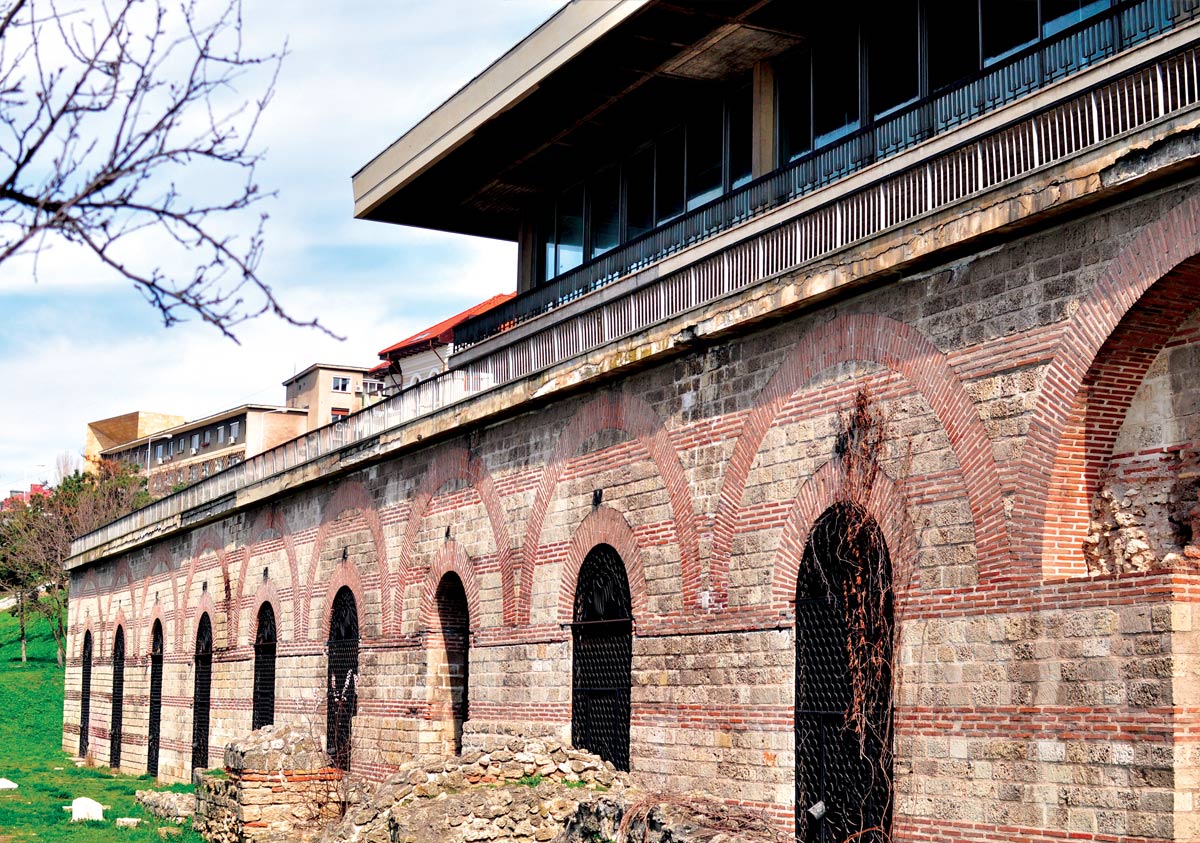
The mosaic edifice, a landmark architectural work of Roman-Byzantine antiquity, was erected on the southwest shore of the Tomitane cliff, as part of a complex project to stabilize the ancient cliff, by terracing and bordering it with buildings with strong walls, oriented towards the ancient port area. Three levels spread out on three terraces sloping into the cliff edge open towards the ancient port, at the same time supporting the land bank that rose above it.
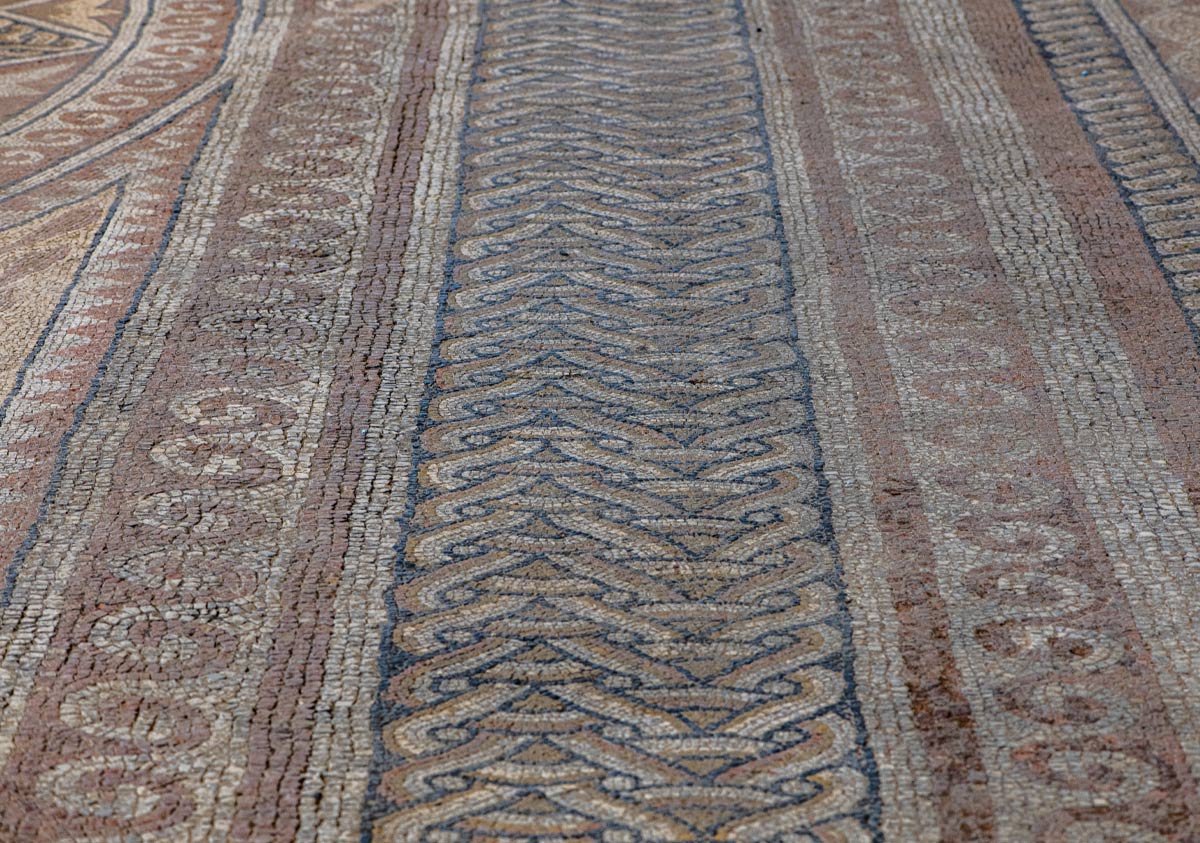
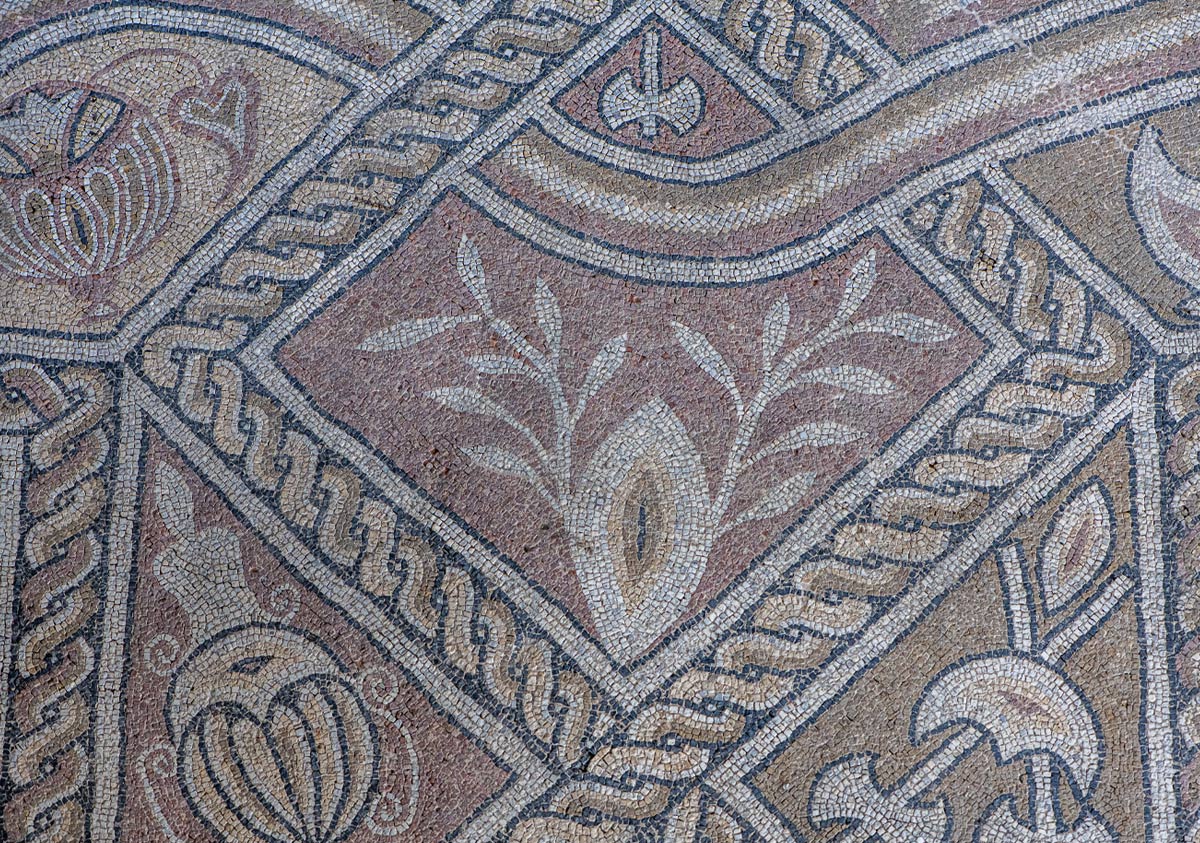
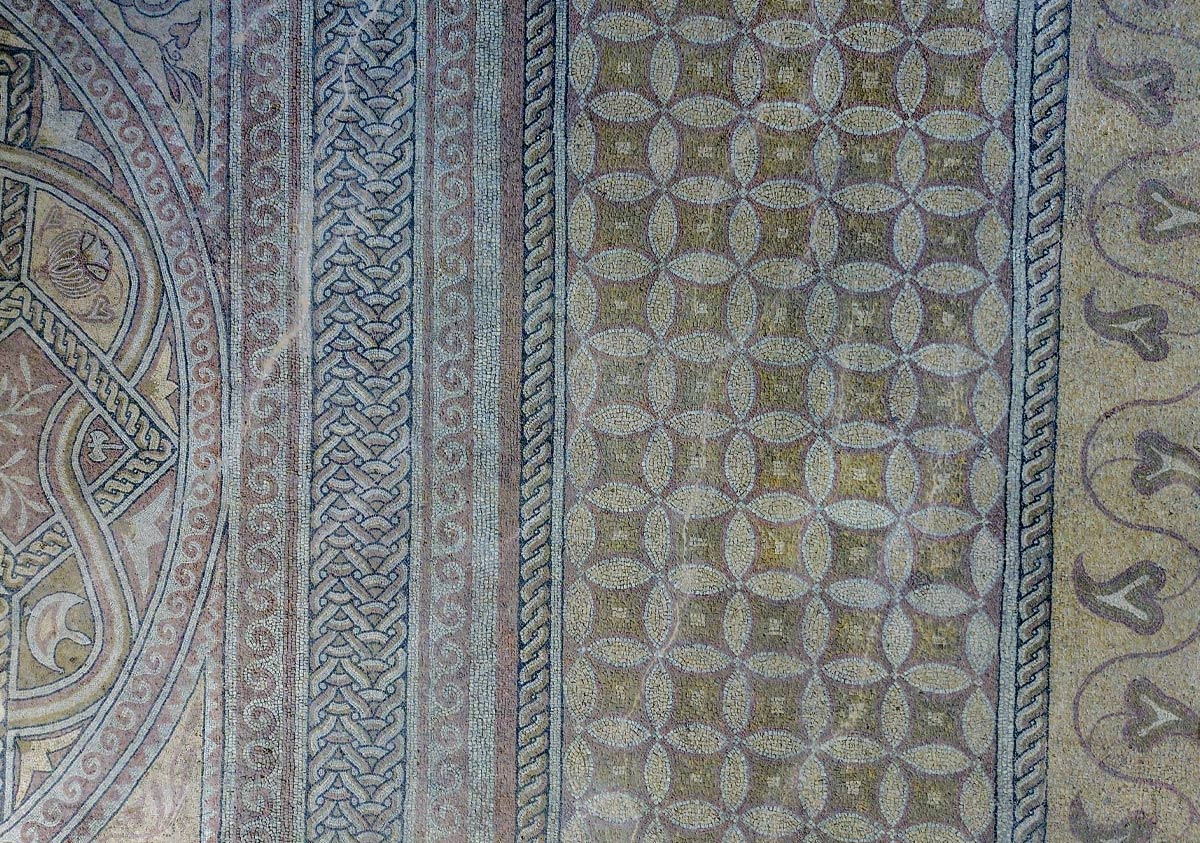
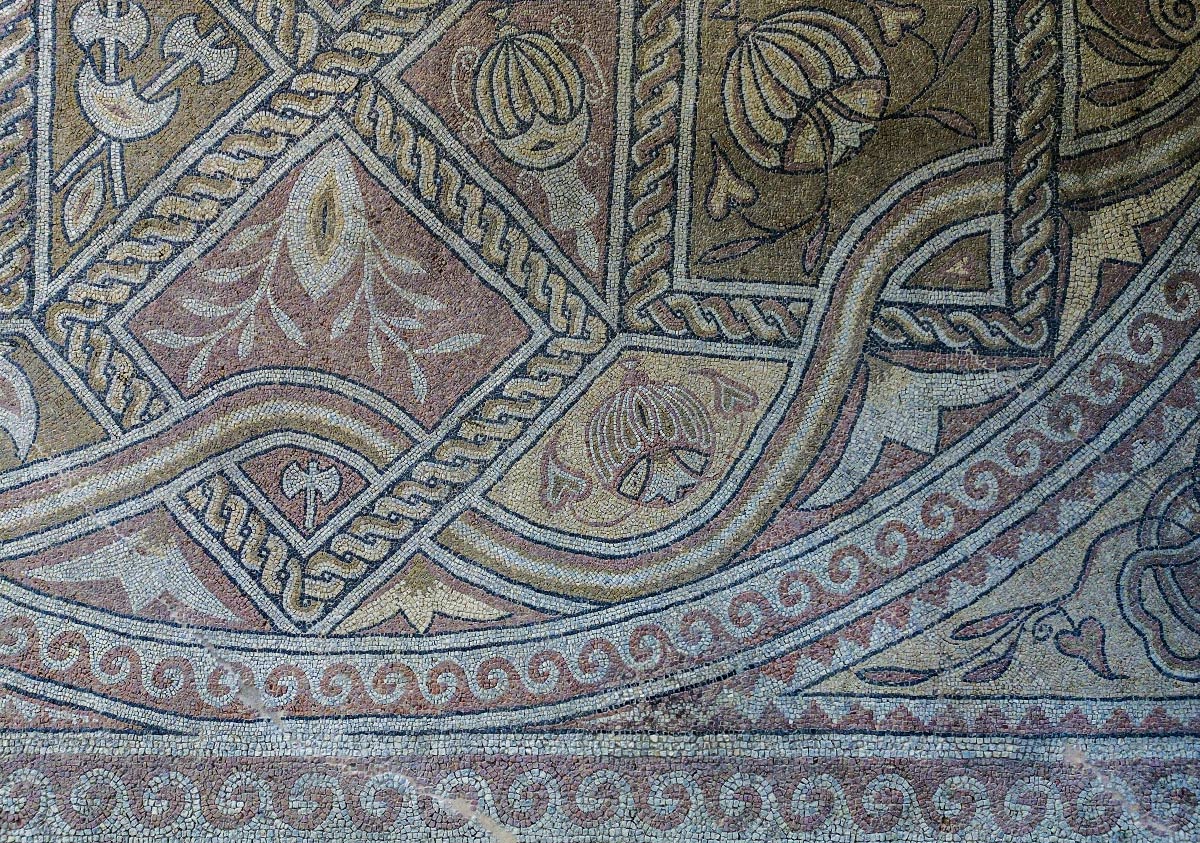
On the upper terrace, located at the level of the ancient city, there is a hall with an area of approximately 2000 sq m, paved with an extraordinary polychrome mosaic, of which approximately 400 sq m are still preserved in place. The pavement is composed of a succession of rectangular fields, alternating with squares with an inscribed circle, inside which it combines, in a play of form and color, geometric, vegetal motifs and various stylizations. The only zoomorphic motif preserved on the surface of the mosaic is a white dove, hidden between the leaves emerging from a stylized vase. The decoration of the walls of the great hall completes the luxury and grandeur of the upper level of the complex: white and colored marble, undecorated or with complex decorative motifs, covered the vertical plane in its entirety. The great hall thus constitutes a suitable setting for political, cultural, social gatherings or for carrying out financial-economic activities in a port city of the importance of ancient Tomis.
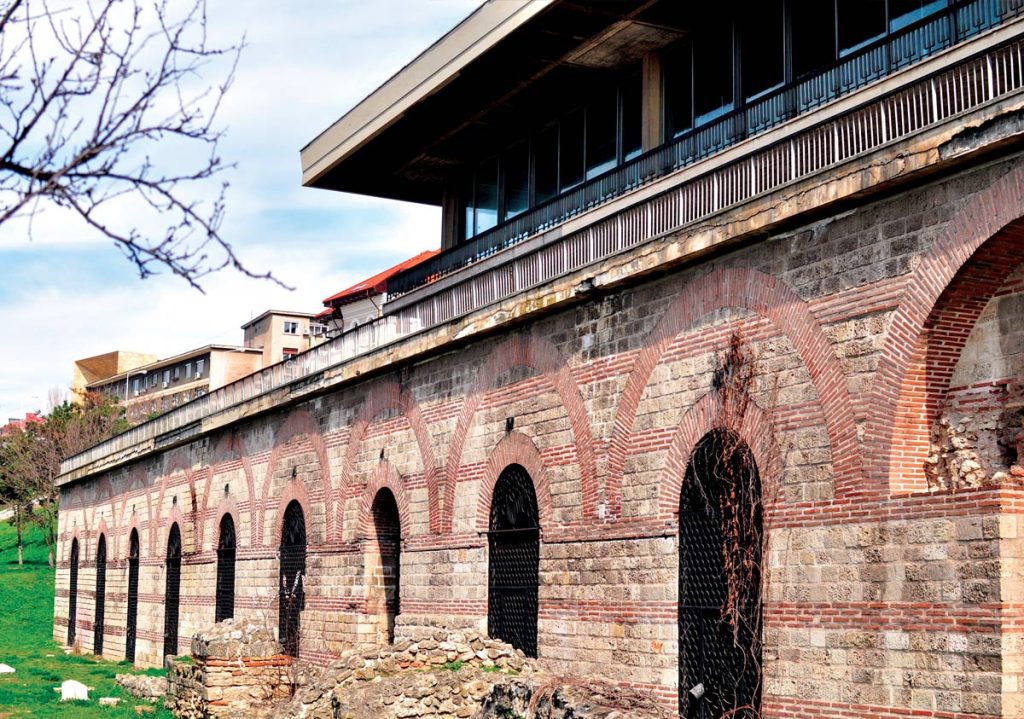


Going down towards the port, on the next terrace, we encounter a row of eleven vaulted rooms, oriented towards the sea and open to a paved space, probably a small square that served this level of the complex. In two of these warehouses – because this was their main role – the inventory of a commercial vessel that had docked in the port of Tomitan was discovered: under the collapsed vaults archaeologists found numerous amphorae with various imported substances, iron ingots, a metal so necessary in the Dobrudja area at that time, amphorae with iron rivets and nails, anchors, etc.
The lowest level, at the quay level, has been almost completely destroyed by modern buildings. It supported another row of vaulted rooms, more elongated than those on the central terrace, also facing the sea, which also functioned as port warehouses. In one of them a rich archaeological inventory was found on site – amphorae of various types, with varied contents.
Built at the turn of the 3rd and 4th centuries AD, the building functioned as the central point of Tomitane's commercial activities until the 6th century AD.
Over 1700 years after its construction, the Roman Mosaic Building, which houses the largest polychrome Roman-Byzantine mosaic discovered so far in the Balkans, continues to delight generations as a signature cultural attraction of Constanta, in a modern museum open to visitors for over five decades.