TEMPORARILY CLOSED FOR REHABILITATION
MUSEUM
The Museum of National History and Archaeology Constanta has a history of over a hundred years, a period that can be divided into three major stages: the period 1878 – 1957 – the most turbulent; then, 1957 – 1977 and, finally, from 1977 to the present.
1878 - 1957
After 1877, the expansion works of the city of Constanța led to the discovery of significant ceramic, statuary, epigraphic, numismatic, etc. vestiges, all attesting to the place of ancient Tomis in the ancient history of the country. The observation that many ancient pieces were in private collections and constituted material for speculation, aroused the concern of the city councilors, in whose vision the idea of an archaeological museum was born.
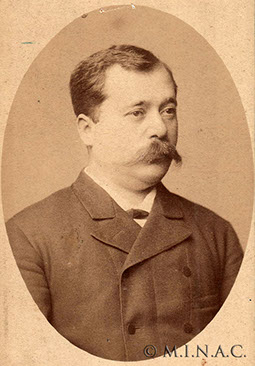
In 1878, Remus Opreanu – the first prefect of the Romanian administration in Dobrogea – proposed to the Romanian Academy that the archaeological materials collected at the Prefecture, through his care and the efforts of the school inspector Ion Bănescu, form a museum. The proposal materialized. Telegram sent to Mihail Kogălniceanu at 30 august 1879 relatează vizita făcută de elevii Școlii Normale din Bârlad la muzeul din Constanța.

The newspapers of the time – local and central – competed in bringing to light the event of the organization of the Constanța museum and its inventory. They praised the fact that, for the time being, the prefecture took the initiative to organize the museum in its own premises; The prefecture was located at the intersection of Traian, Sulmona and Bd. Tomis streets. The small pieces, plus 15 sculptures, were arranged in the Prefect's Office, and 27 large pieces (votive and funerary inscriptions) were exhibited on both sides of the alley. Let us emphasize that the authorities praised in the press the residents who, making accidental discoveries during various works, donated them to the newly established museum. Thus, we also learn the name of the first donor: Chevara Casabian.
The fire of 1882, which destroyed the Prefecture Palace, also caused the disorganization of the museum created by Remus Opreanu. The monuments saved from the fire were housed in the "pavilion" in the public garden.
Years pass and the pieces of the museum organized by R. Opreanu and I. Bănescu, saved from the fire of 1882, continue to be housed in various places.
The year 1906 was promising for the museum. G. Gr. Cantacuzino authorized, by Order no. 36349 / July 11, 1906, to form a Committee in Constanța to deal with the reorganization of the Museum. On July 22, a meeting of the Committee was held, through which measures were taken to raise the funds necessary to build the museum. In December, Prefect M. Capşa sent a report to the Ministry requesting legal approval to re-establish the museum. This was sent for approval to the director of the National Museum of Antiquities. And, again, nothing happened.
Between 1910 and 1911, all the antiquities from Constanta were stored at the "Mircea cel Bătrân" gymnasium, without any administrative or scientific organization. The funds collected by the Committee (about 5,000 lei) were deposited at the bank, in the account of the MNA, represented by its directorate and the authorized representative from Constanta, prof. N. Orghidan - custodian of the local museum.
In 1911 Vasile Pârvan, who had come to manage the National Museum of Antiquities, submitted a report to the Ministry of Religions and Public Instruction in which he again raised the issue of establishing a museum in Constanța. The Ministry's Order, series B, no. 73245 / 27 Oct. 1911, was favorable. Thus, Vasile Pârvan's Report and the Ministry's Order are considered – from this date – the founding documents of the Museum of Antiquities in Constanța.
Prof. N. Orghidan requests, and obtains, material support in conducting archaeological research along the route of the city's sewer ditches.
After the transfer of Professor Orghidan to Craiova, the Museum was moved to the Teachers' Training School. Its director, Professor I. Ghibănescu, was appointed custodian of the museum on September 29, 1912.
Ghibănescu supervises, as much as he can, the constructions that are being done in the city and its surroundings and, together with his students, collects and brings to the museum all the vestiges. He manages to make the museum an independent institution by moving it to a building in the municipal park, given by the City Hall which also granted a subsidy for the payment of a guard. The museum, in the new building, also had a visiting schedule: Thursdays and Sundays, between 2 and 4:30 p.m.

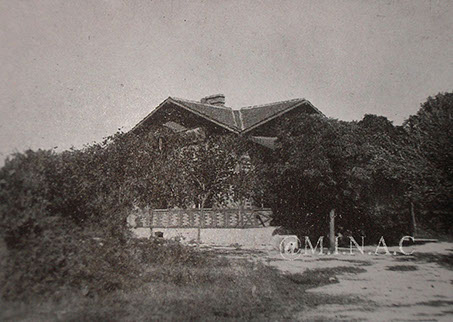
A document from 1913 states: "We hope that the current and future local and county administrations will make it a point, if time permits, to provide all support for the establishment and maintenance of a beautiful museum of antiquities. The Tomis Fortress Museum."
In January 1915, Vasile Pârvan began excavations at the Tomis enclosure wall; based on the results obtained, he established the outline of the enclosure and made the first topographical plan of the ruins of the ancient fortress, seriously destroyed by the constructions erected after 1878. The systematic research undertaken in Constanța by the National Museum of Antiquities, in parallel with the municipal works, led to the discovery of an appreciable quantity of archaeological monuments that enriched the heritage of the museum, which, as yet, did not have an adequate space, continuing to operate in the kiosk in the park.
The museum's initial difficulties were compounded by the outbreak of World War II. After the war, everything had to be started from scratch.
It was not until 1928, on the occasion of the semicentennial of Independence, that Prof. C. Brătescu organized an archaeological and ethnological exhibition in the pavilion in front of the Constanta Casino. After the end of the jubilee festivities, at the insistence of the exhibition organizer, the museum was organized in the left wing of the City Hall – seemingly foreshadowing its permanent move here for the centennial jubilee.
Although established in 1928, the museum would only open its doors in 1930, and from the summer of 1935, when classification by historical eras began, it became an institution organized on scientific criteria.

The permanent growth of the collections through donations, acquisitions, rescue excavations or organized research – in Histria, Capidava, Adamclisi, Constanța – raised the problem of insufficient space. For example, in 1937, the archaeology section had 272 pieces registered; that is why, a first solution was to transfer the museum to the brewery in front of the Casino (the current headquarters of the Aquarium). In the new headquarters, the museum had a visiting schedule (9 – 12; 16 – 18 during the summer), and the entrance fee was 5 lei. Prof. Ioan Micu reported, at the end of 1938, a number of 5000 visitors.
During World War II, the museum temporarily ceased its activity. After 1945, special attention was paid to the conservation of the pieces and the enhancement of the archaeological treasure of Constanța, a city considered – rightly – itself an open-air museum.
Between 1948 and 1951, as part of the repair works at the Casino, repairs were also made to its annex where the museum was housed. The reorganization action imposed multiple and difficult tasks on the museum's small team: Prof. Gh. Iordănescu – director; Prof. Carol Blum – secretary and a guard.
Since the end of 1951, when Prof. Nubar Hampartumian was appointed director, a more alert activity has been observed through the measures taken: restoration of pieces, recovery of archaeological values that were at the National Museum of Antiquities in Bucharest, field trips to collect new objects, archaeological classification and drafting of a catalog-inventory of the books and magazines in the museum library. The complexity of the activities required the expansion of the team; consequently, a museographer and a restorer were hired.
A new stage in the life of the museum began in 1956. In order to increase the network of museums in Constanța, the Executive Committee of the Regional People's Council accepted the collaboration with Vasile Canarache, senior researcher at the Institute of Archaeology of the Bucharest Academy; he assumed the obligation of reorganizing the museum in Constanța as scientific and techno-museographic coordinator. The plans conceived at the end of 1956 and at the beginning of the following year provided for several institutions of this kind: the Museum of Archaeology, which was to be assigned the premises of the old faculty of fish farming; the Aquarium – installed in the annex of the Casino; the expansion of the museums in Mangalia, Adamclisi and Histria. The acceleration of the pace of the renovation of the construction was imposed by an international cultural event: the bimillennial of the birth of the great poet exiled to Tomis – Publius Ovidius Naso.
1957 - 1977
On September 22, 1957, the museum was partially inaugurated in its new headquarters. After the festivities ended, the organizational work was resumed so that by the end of the year the objective was achieved: the Constanța Museum of Archaeology existed with a basic exhibition, restoration laboratory, specialized library, and modern furniture.
In its new existence, the museum has proven to be an experienced organization, characterized by high professionalism, intervening with its specialists both in rescue excavations and in systematic research on large construction sites.
Thus, little by little, the museum began to transform from a simple repository of archaeological and historical values into a genuine research center. Thanks to them, for 20 years (1957 – 1977), the Constanța museum became a world-renowned institution. But, through its exhibits, the Constanța museum ended its narrative at the beginning of the Middle Ages. For an exhibition of history up to the present day, another space and a new theme were necessary.
The occasion for another stage in the museum's life was the celebration of the Centennial of Independence. The entire City Hall building – itself a historical monument – was offered for the new theme, which would also lead to the change of the institution's name.

After 1977
On December 25, 1977, the Constanța Museum of National History and Archaeology was inaugurated. The attribute of national granted to a provincial institution is the fully justified expression of the scientific and propaganda position of the institution. The exhibition space occupies three levels: ground floor, first floor and second floor. On the ground floor there are two Treasury rooms; the first floor includes, chronologically, the ancient and medieval history of Dobrogea; on the second floor modern history continues and several thematic exhibitions are also arranged.


THE BUILDING
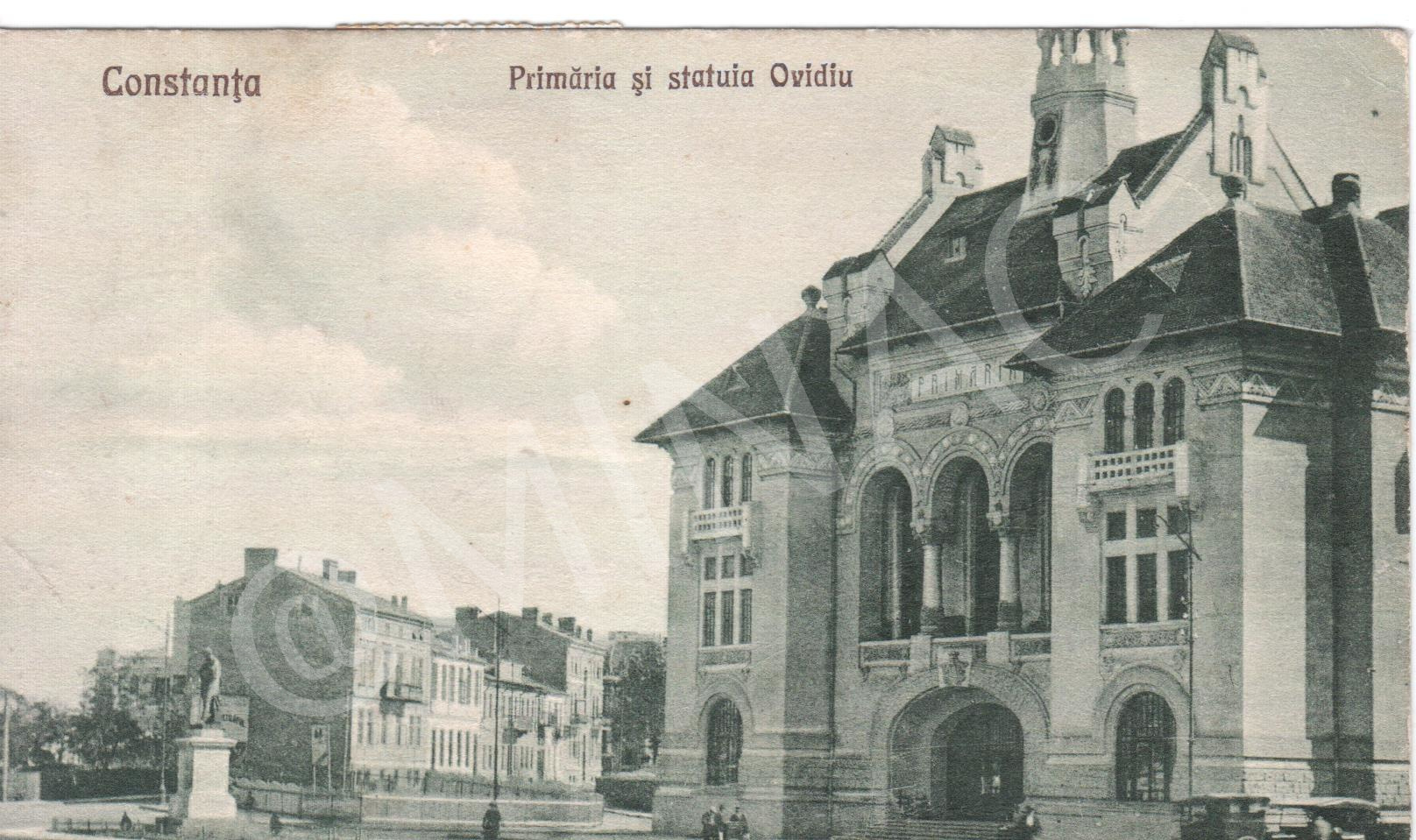
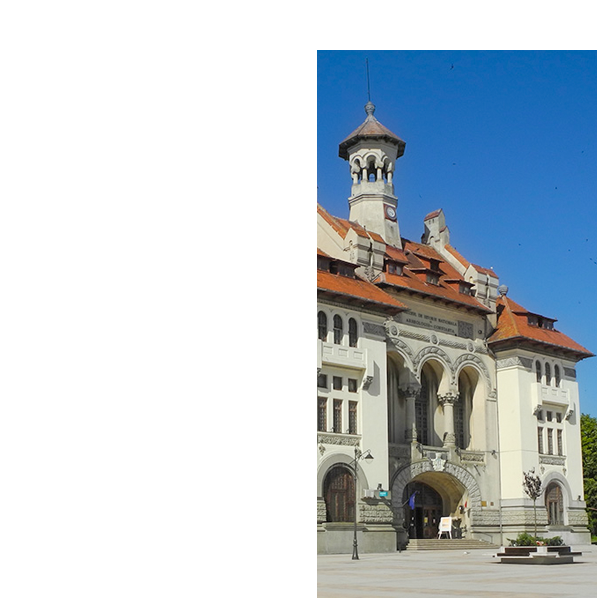
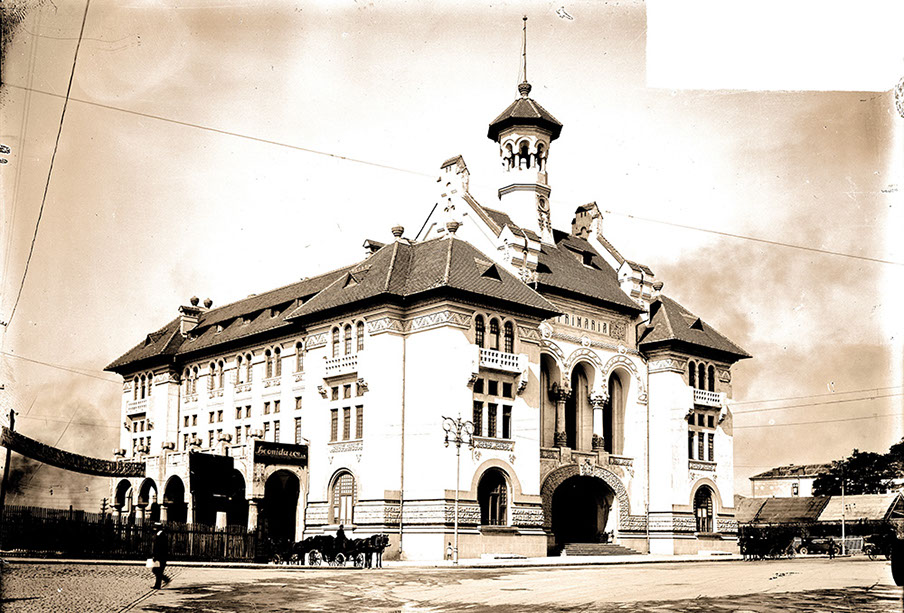
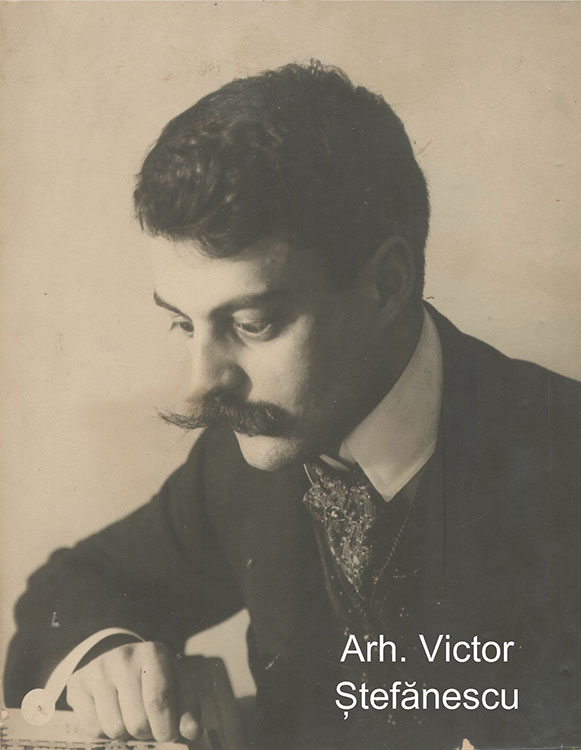
The building that dominates Ovidiu Square – the Museum of National History and Archaeology of Constanța – was the seat of the City Hall, called the Communal Palace at the time. Its construction began in the year 1911 according to the plans of arch. Victor Ştephănescu and completed, with a delay, due to the war, in 1921. With external dimensions of 47 x 38 m. (without the side galleries) and a height of 42 m. (up to the top of the tower), with a ground floor area of 1668 sq m., the building, worked in the neo-Romanian style, has a monumental appearance. Today it is part of the national heritage, being noted in the list of historical monuments with the code CT-II-m-A-02831. It extends vertically on 5 levels: basement, ground floor, two floors and attic.
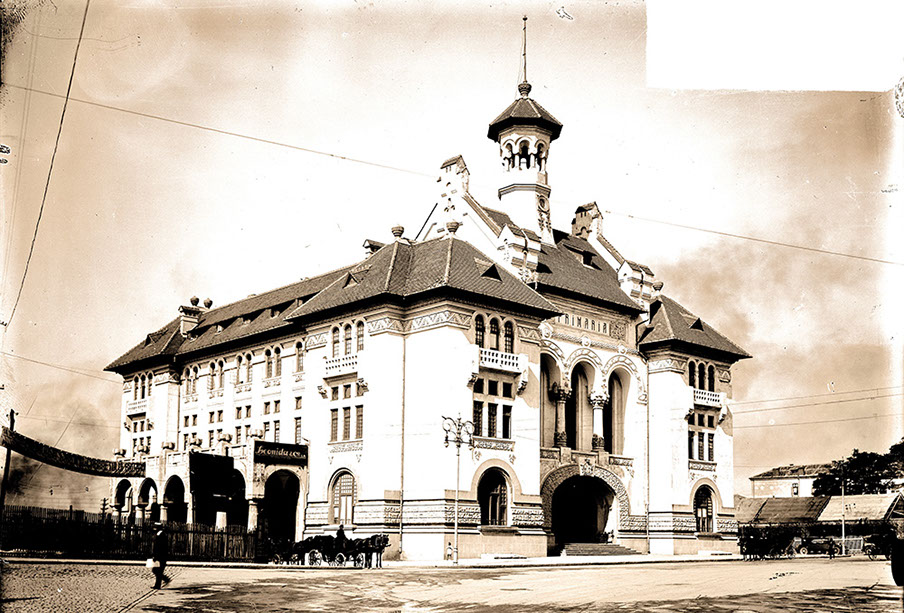
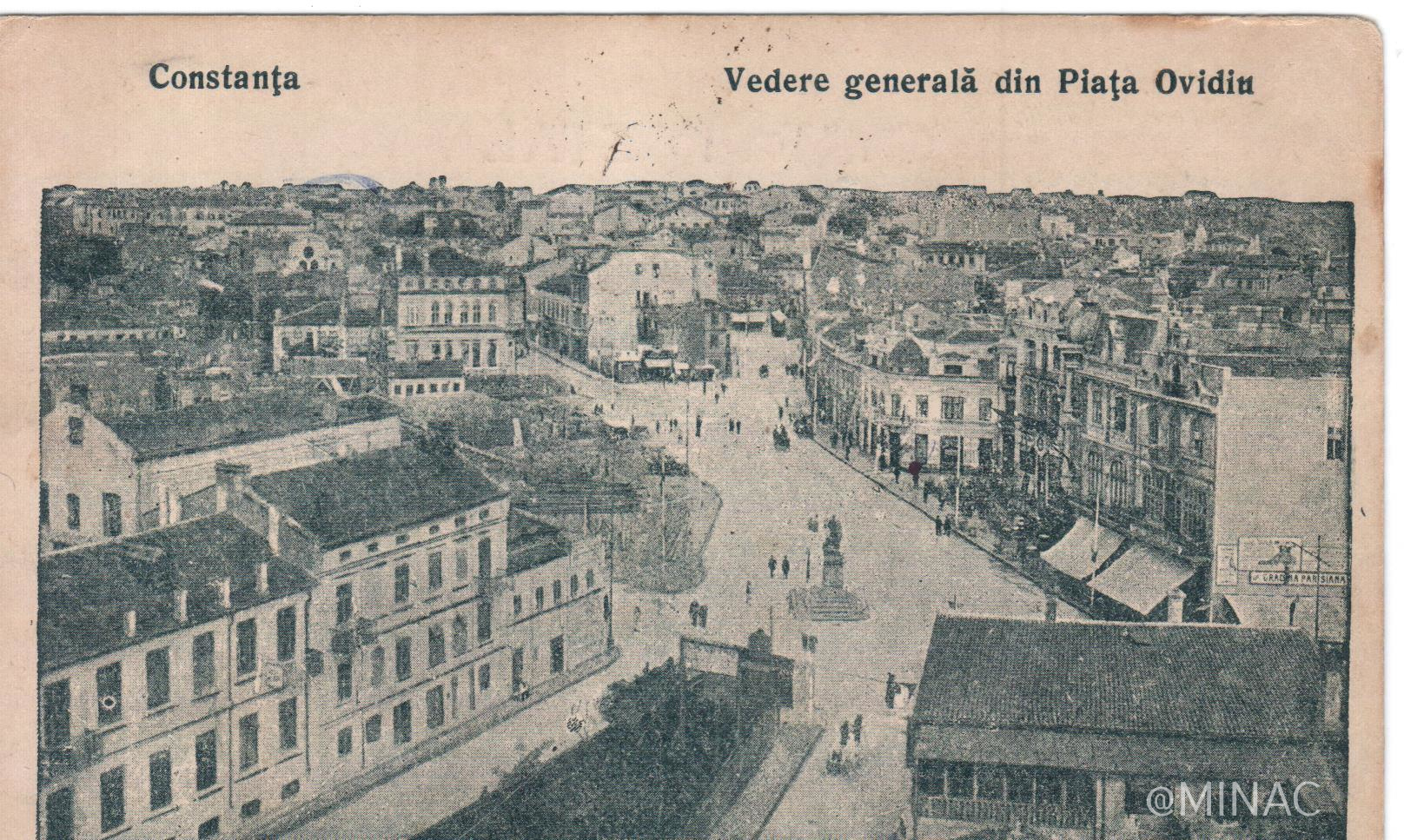

When it was the city hall, the interior spaces (located on the four sides of the building, with an interior courtyard in the middle) had different functionalities: in the basement there was a spacious wine cellar-brewery - for 300 consumers with all the necessary annexes; on the ground floor there were the Municipal Revenue Service, the Cashier's Office, the Medical Service, the City Hygiene Service, as well as two large rooms, on the sides of the building (a café-confectionery and a restaurant) with entrances provided with terraces (covered porticos, which today house ancient vestiges); on the first floor, in the central bay, there was the Council Room (with a height of two levels and a monumental loggia facing Ovidiu Square) and on either side of it were the Marriage Hall and the Mayor's Office; on the other 3 sides of this floor there were the Secretariat, the Legal Service and the Accounting Service; on the second floor there were other services, including the Architecture, the Technical and Construction Service, the Archives; other services were in the attic. The City Hall functioned here until 1977 when it moved to the new building in the Archaeological Park (Casa Albă), and the Archaeological Museum, which had functioned until then in the Archbishopric building, moved in its place.
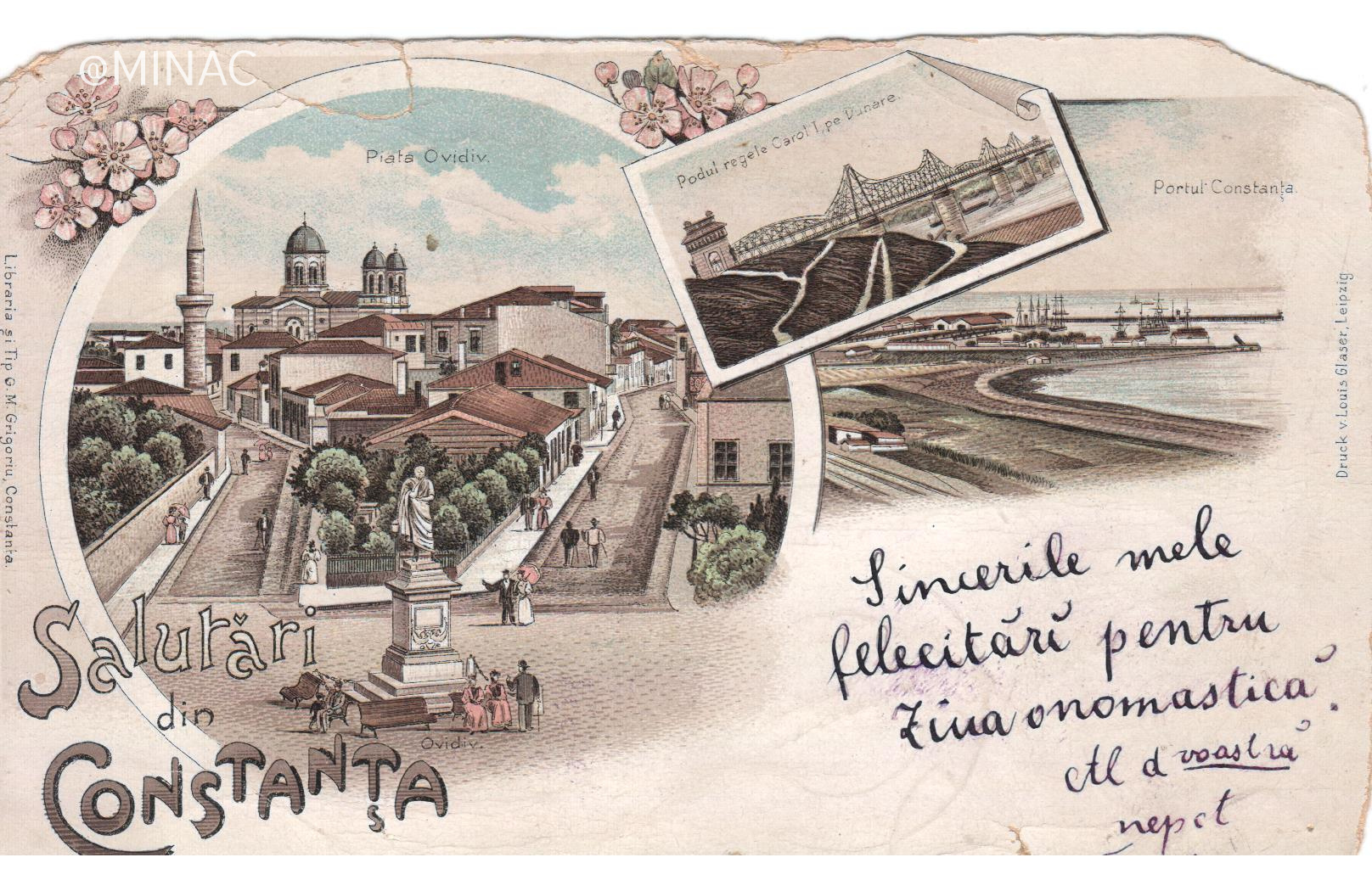
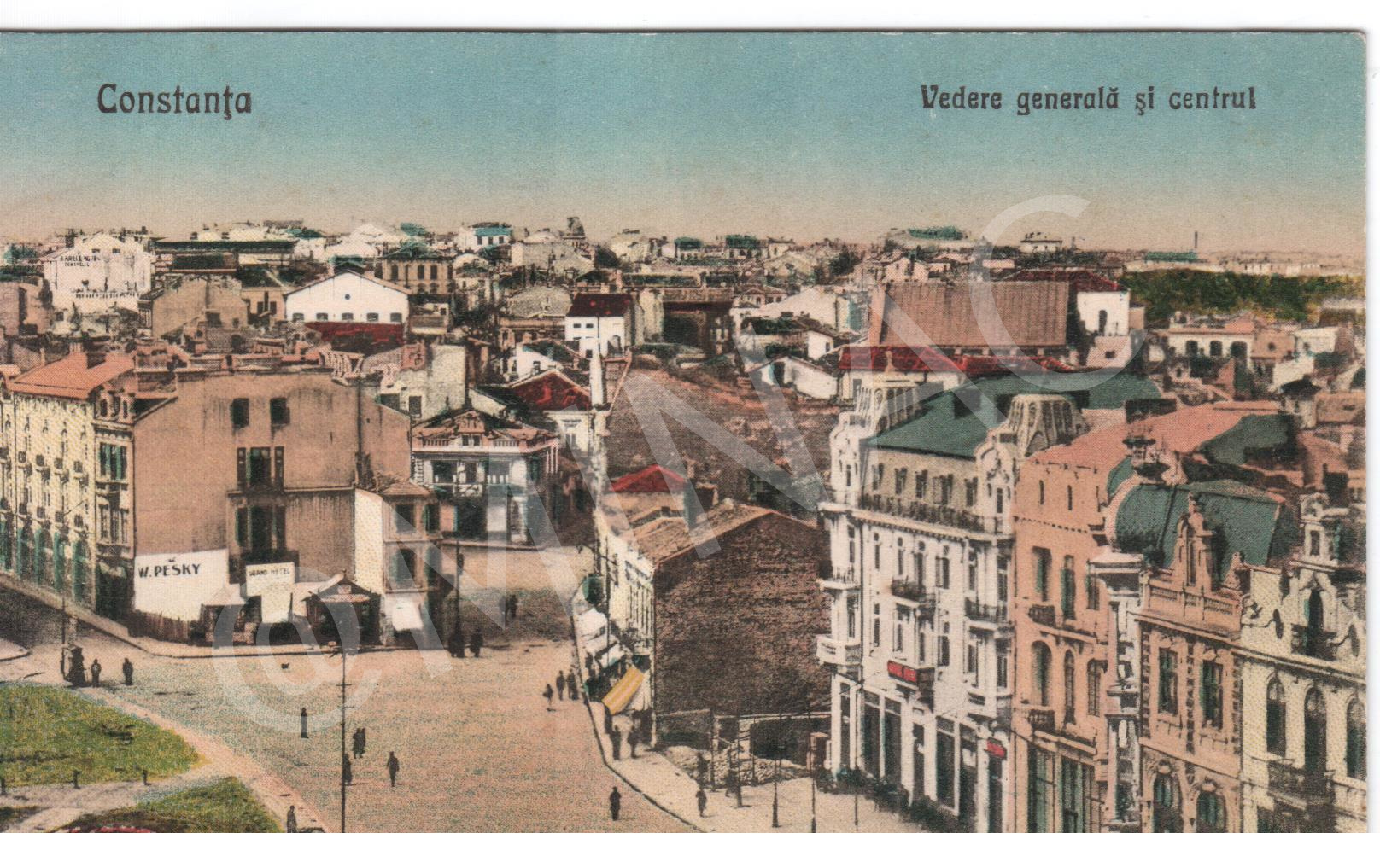
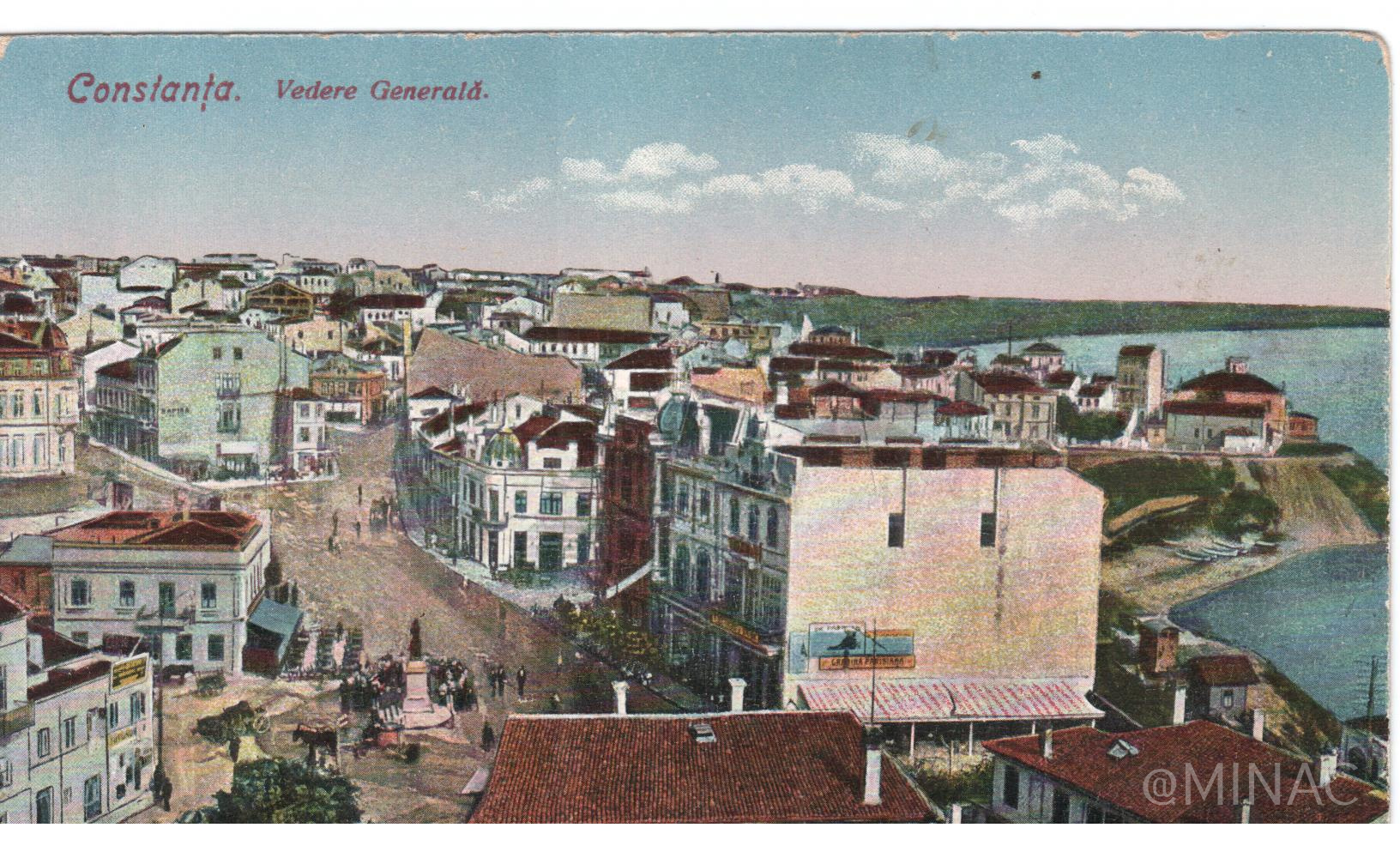
Also in 1911, an important decision in which arch. Victor Ştephănescu would be involved was the one regarding the location on which the Communal Palace would be built and, on this occasion, the design of the systematization of Ovidiu Square. The square, until it was established that this was the most appropriate place for the City Hall, was actually divided in two (because it narrowed in the middle – viewed in plan, it could be said that it looked like two triangles with a common vertex). One side, to the south, was a civic square in the middle of which the statue of Ovid (facing north) stood, and the other, to the north, was a square that became commercial on Saturdays and Sundays, where the farmyard was organized! There were two streets, Thetis and Neptun, that descended from the two squares and that joined downhill into a single one that opened into the port under a railway bridge! Yes, there was a railway here that had a route parallel to Ovidiu Street and had a line head above Gate 1 of the Port of Constanta (where the statue of Anghel Saligny is now), the other line head being La Vii, above the main beach of Constanta until 1906 (right next to today's Gate 5). On Thetis Street, from the stable, cattle were driven to the port, to be exported to Constantinople...
According to the plans signed by Ștephănescu, the houses, stables and barracks on a considerable area were demolished, making way for a single, rectangular square, on the axis of which the Communal Palace was erected, facing the port. On the same axis, in the center of the square, the statue of Ovid was moved, facing the current Port Tomis.
In World War I, Constanța fell to enemy troops (October 1916). During the occupation, many houses were devastated and Romanians who did not take refuge were mistreated or even killed. The statue of "Avântul Țării" (in front of the former Royal Palace) was destroyed by the Bulgarians and the statue of Ovid was to suffer the same fate, but was replaced on its pedestal by the Germans. At the end of the war, after the departure of the occupation troops, most of the important buildings in Constanța were in a deplorable state, including the Communal Palace, its restoration taking 3 years (1919-1921).
-
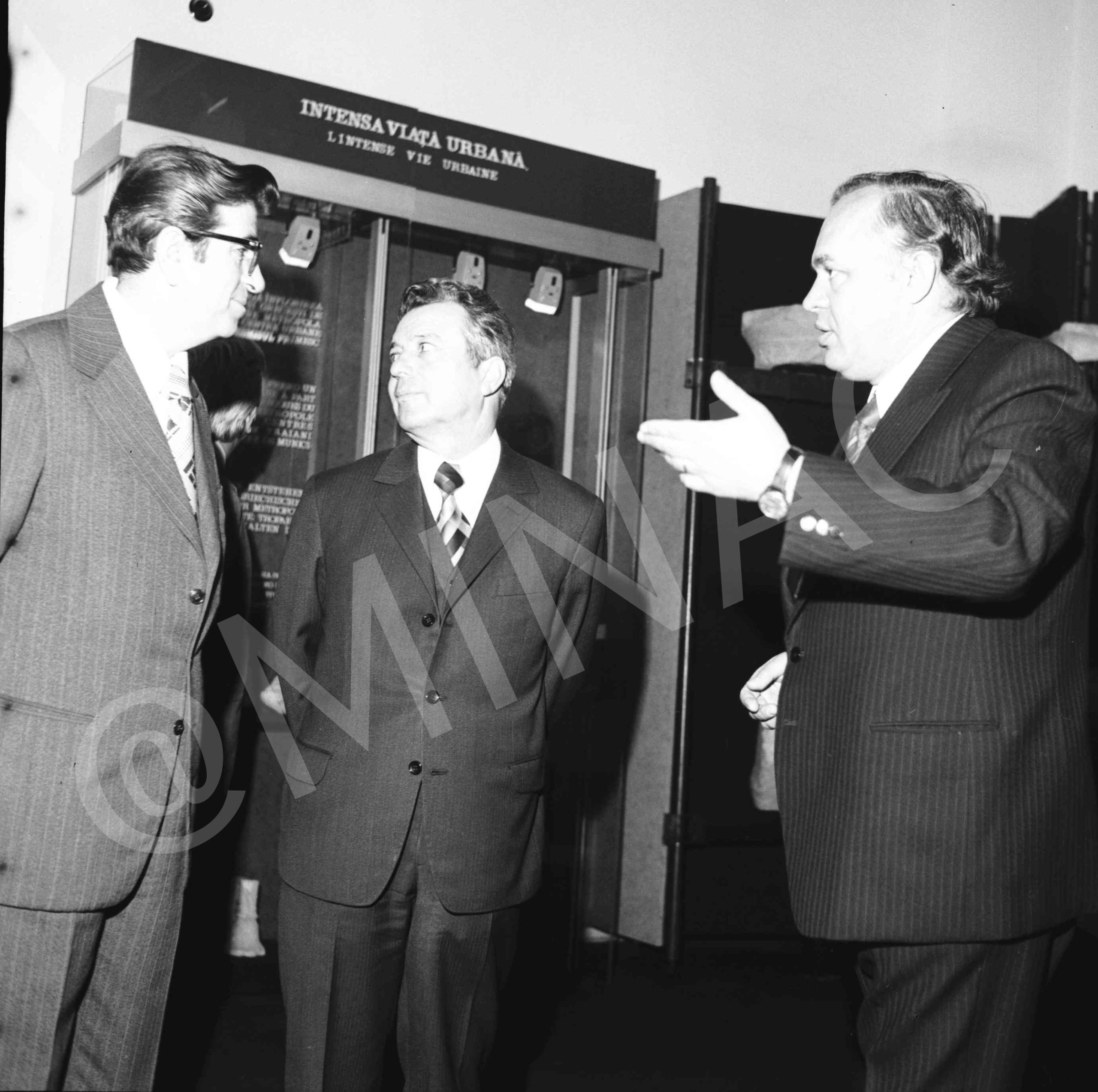
- Opening of the Museum, 1977
-
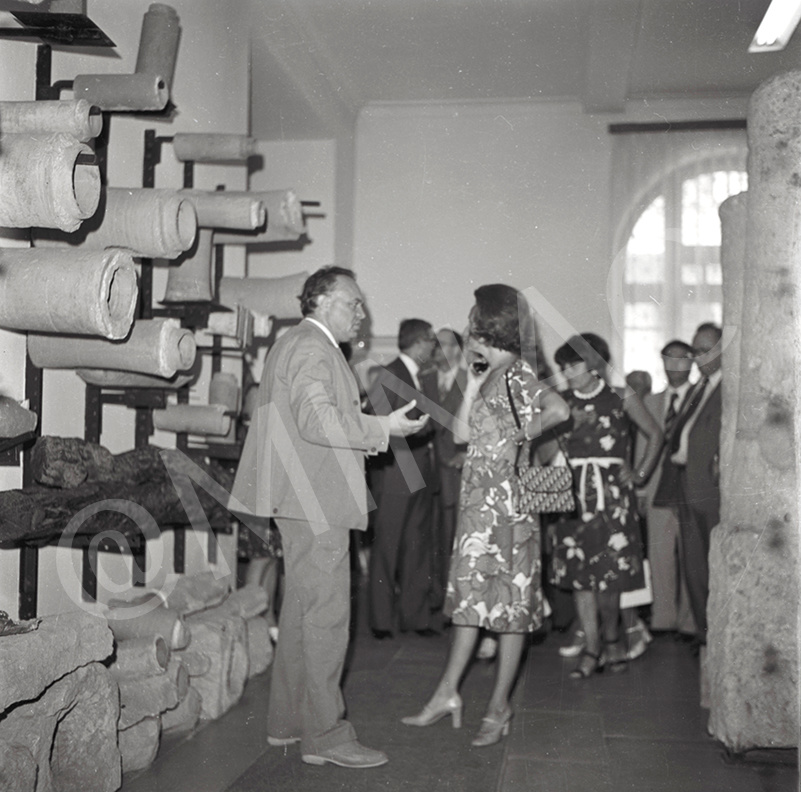
- A. Rădulescu leading an official delegation to the Old Museum