

CARSIUM Museum, Hârșova
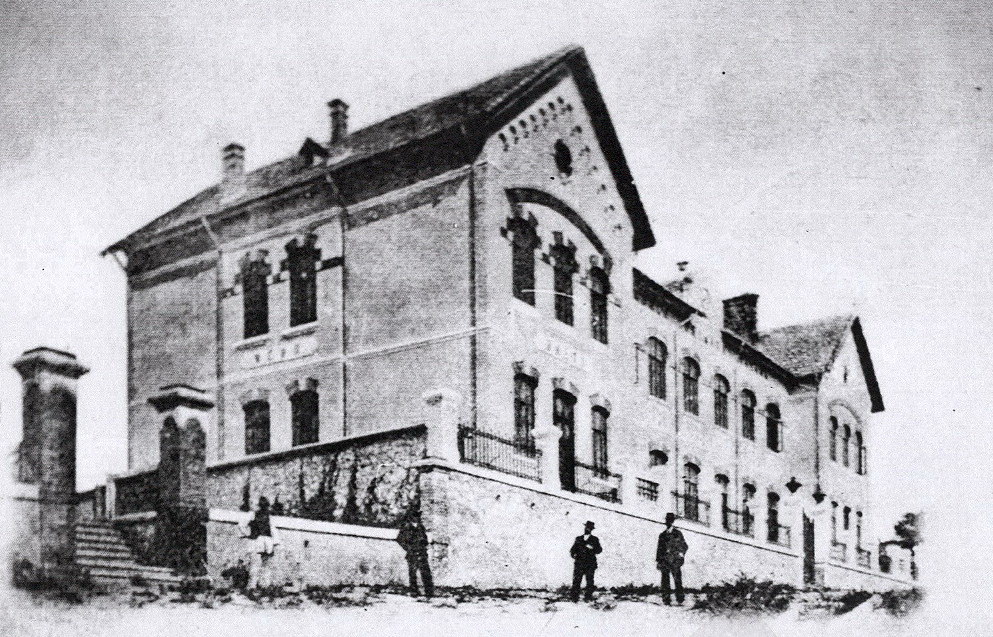
The accidental archaeological discoveries during the construction of the modern city, after 1878, were exploited, first, by the teacher Ioan Cotovu and then by his son Vasile Cotov, considered the founder of one of the largest Dobrogea museums at the beginning of the 20th century. The museum was housed in the state school built in 1902. Its inventory register, from 1904, includes over 15,000 pieces from various fields: archaeology, art, natural sciences, paleontology, ethnography.
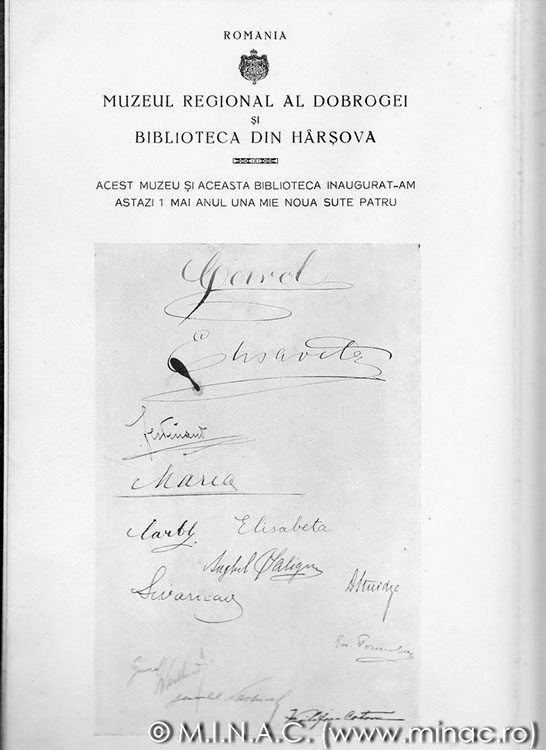
The museum was inaugurated by King Carol I and Queen Elisabeth on May 1, 1905.
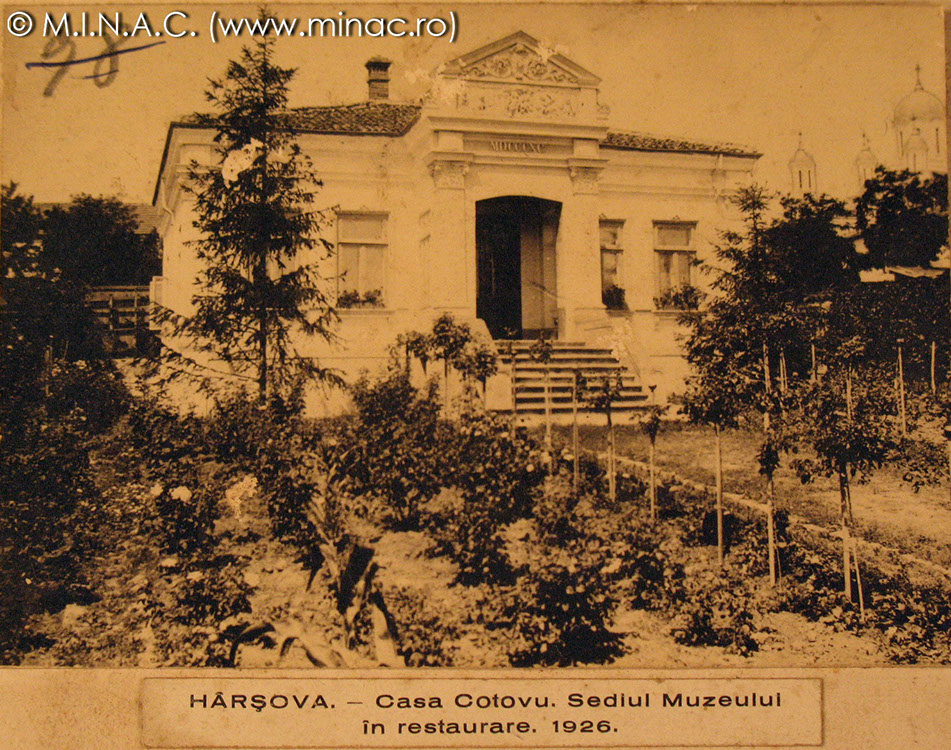
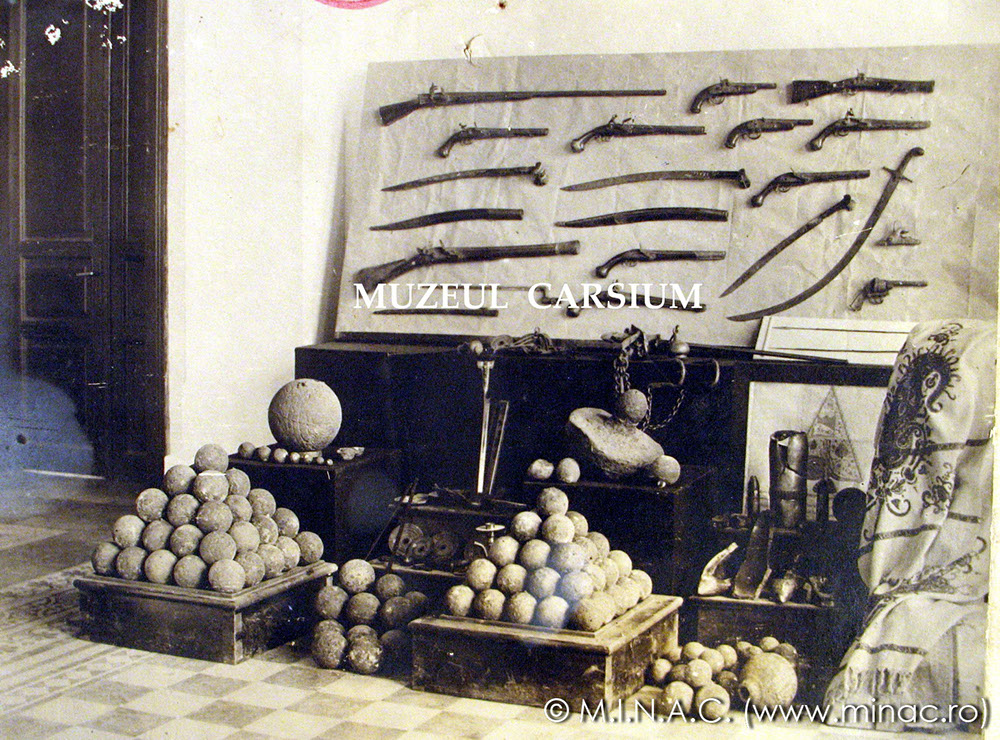
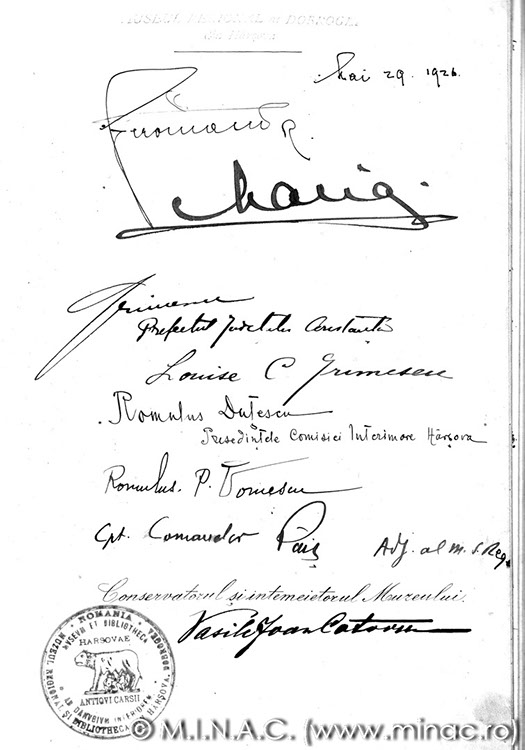
Destroyed during the First World War, it will be rebuilt by Vasile Cotovu in his own home. A marble plaque was mounted on the frontispiece of the building, recording the inauguration of the museum in 1926 by King Ferdinand and Queen Maria (Photo 4). With the establishment of the communist regime, the museum is closed. Part of the pieces and furniture will be taken over by the museum in Constanța. Another part by the communist bourgeoisie of the town. The reorganization of the museum in Hârșova animated the hopes of many Hârșova residents. In 1987, the "Archaeological Exhibition of the City" opens at the Pioneer House in the town.
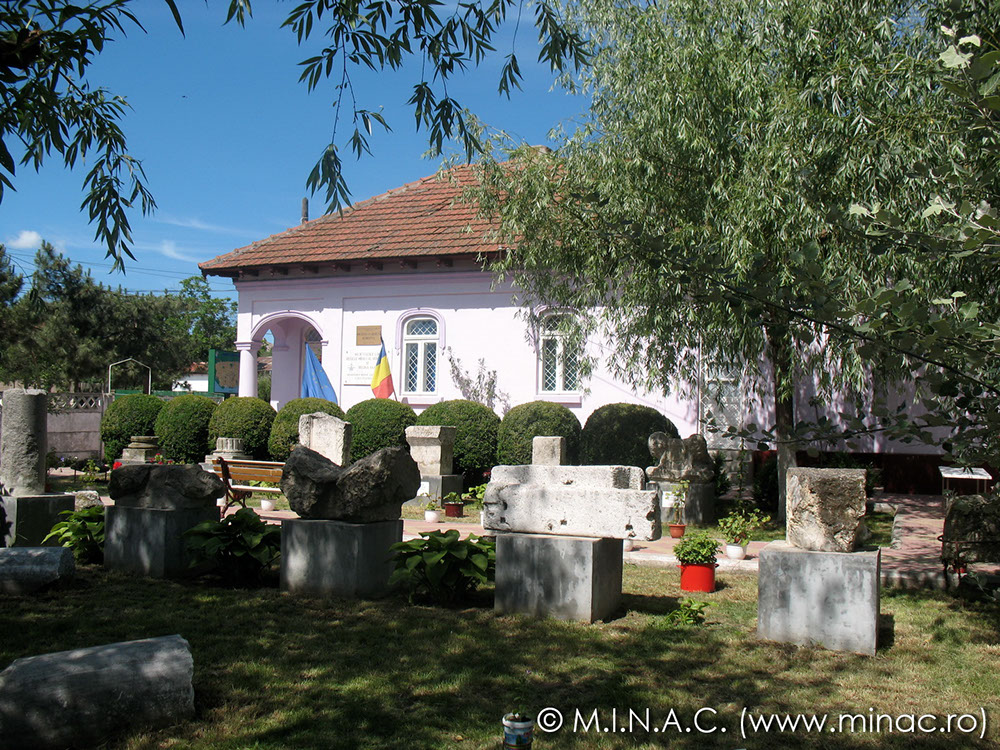
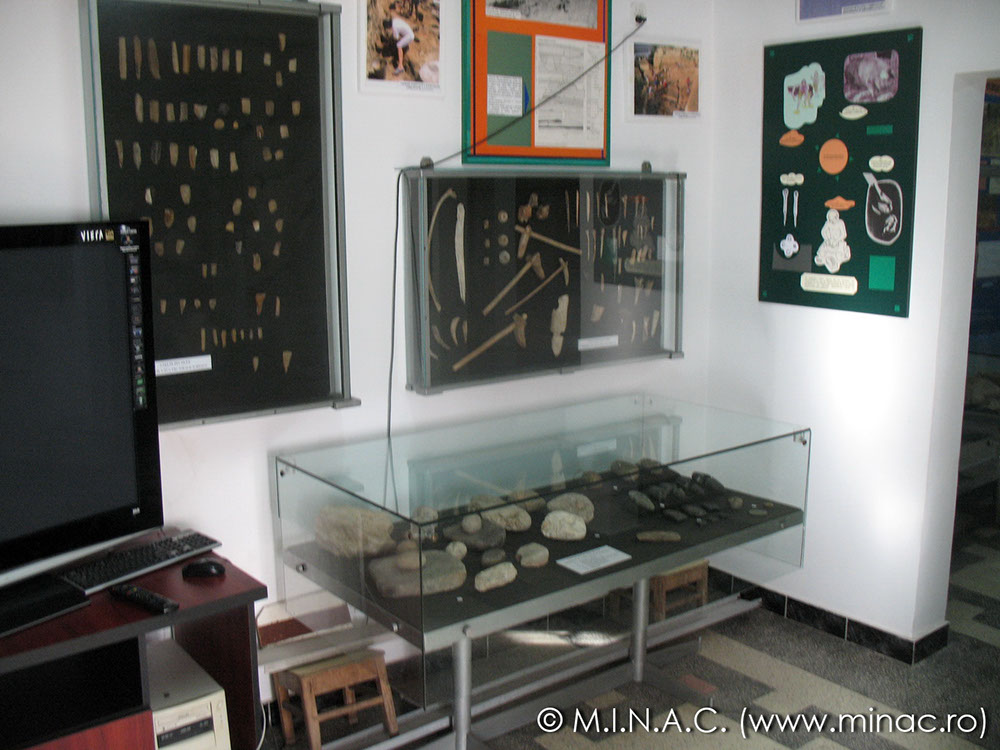
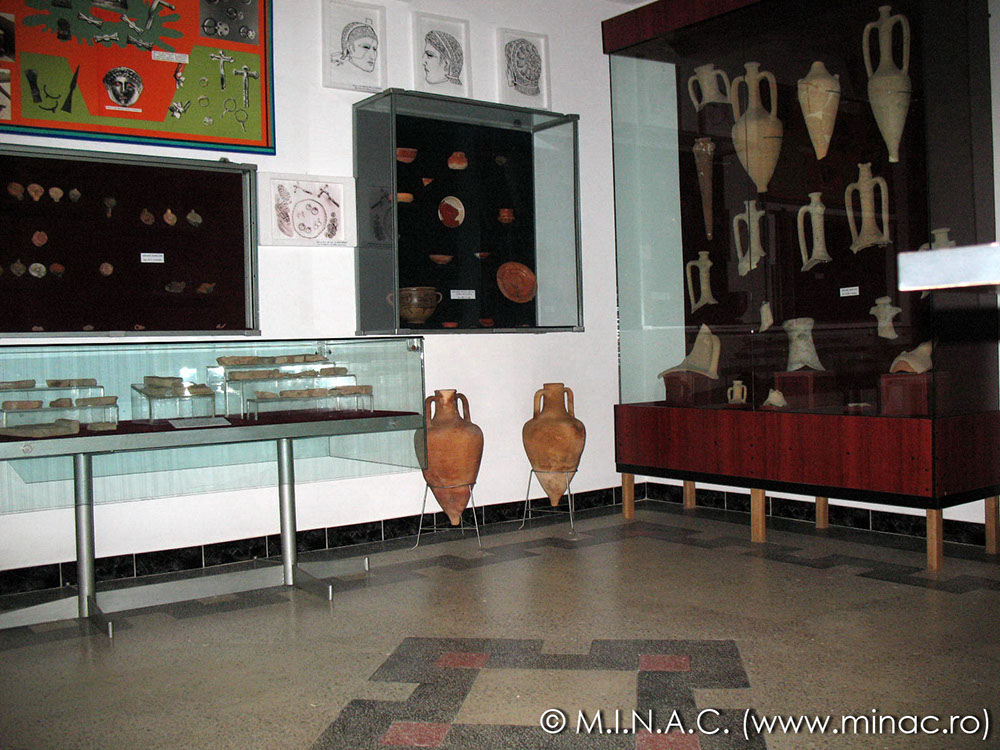
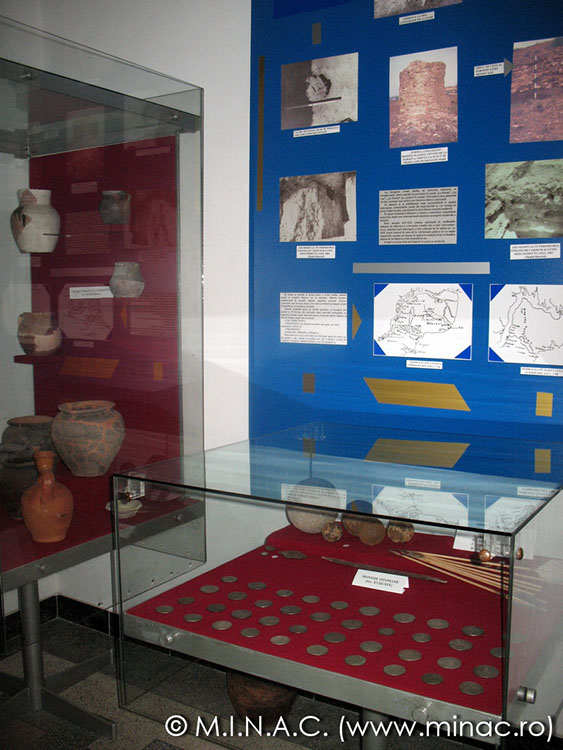
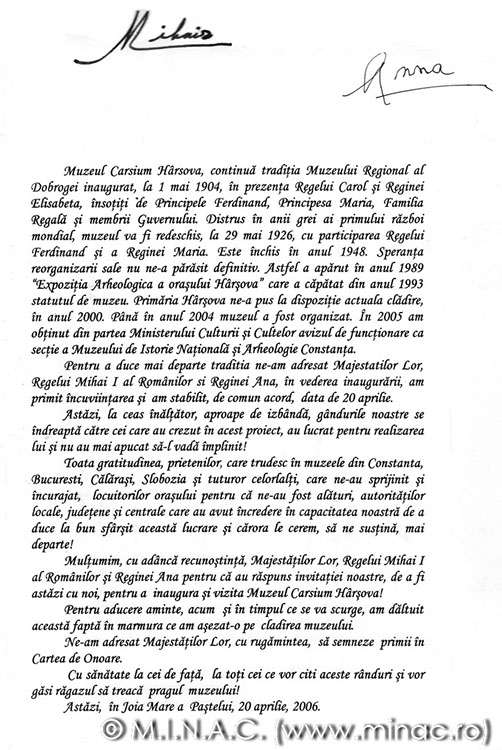
Enthusiastic about this “feat”, Adrian Rădulescu, director of the Constanta museum and professor at “Ovidius” University, together with Mihai Irimia, dean of the Faculty of History at “Ovidius” University, decided to organize the museum in a separate space. After long searches and struggles, the local authority made the building at 27 Revolutiei Street available. Between 2000 and 2005, the building was prepared, the museum was arranged, and in April 2006, the Carsium Hârșova Museum was inaugurated, with the participation of King Mihai and Queen Ana. Here, pieces discovered in archaeological excavations from the Neolithic settlement, the Roman and medieval fortress, as well as from their necropolises, were presented to the public.
Because archaeological research developed, the number of artifacts increased, the ceramic material intended for study became voluminous, the initiative was taken to relocate the museum to the old school, where it was founded. Thus, the "operation homecoming" was launched, with European funding on the Romania-Bulgaria axis.
The Vasile Cotovu Ensemble was included in the project with the aim of transforming it into a cultural center: the Cotovu house will become a library, and the old school the headquarters of the Carsium Museum. The space was designed to be able to exhibit several thousand artifacts. The museum will have a warehouse and a conference room. The days and months of 2025 are decisive for the completion of this project.
Gallery
The Fortress of Hârșova
Archaeological research in recent decades has clarified the relationship between the ancient and medieval stages of the Hârșova fortress. Until now, there was confusion between the two. Thus, the reserved area between Citadel Street and the Danube was known, improperly, as "Carsium Fortress". We are now able to distinguish, horizontally but also stratigraphically, vertically, the ancient fortress from the medieval fortress.
THE ANCIENT FORTRESS.
It is known in ancient sources, from Ptolemy to Constantine Porphyrogenitus (2nd-10th centuries) with the names Carsum, Carsio, Carso, Carsos, Carsium. The toponym, whose origin may be Thracian or Illyrian, reflects the rocky appearance of the place on which it was built.
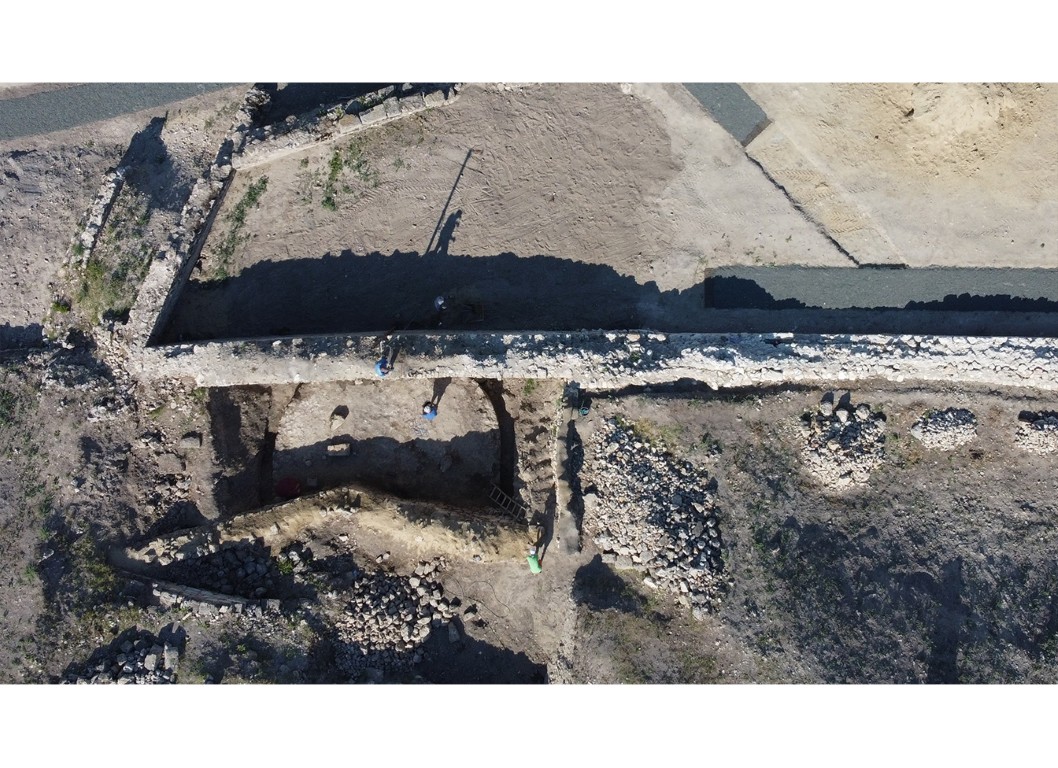
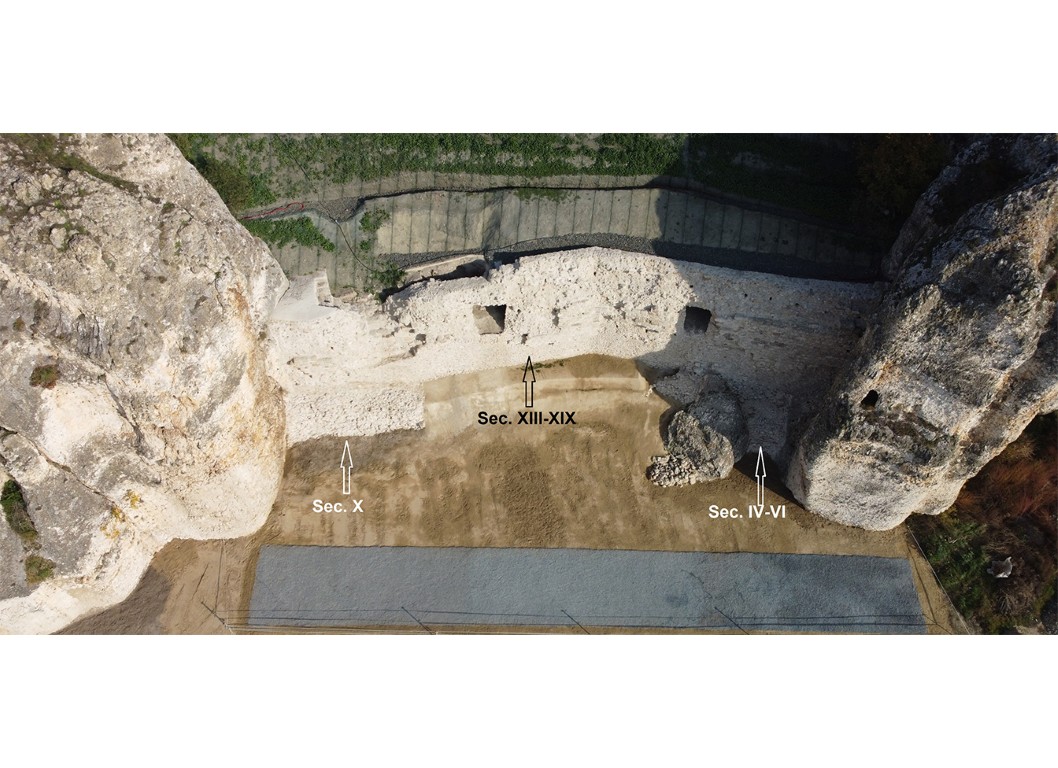
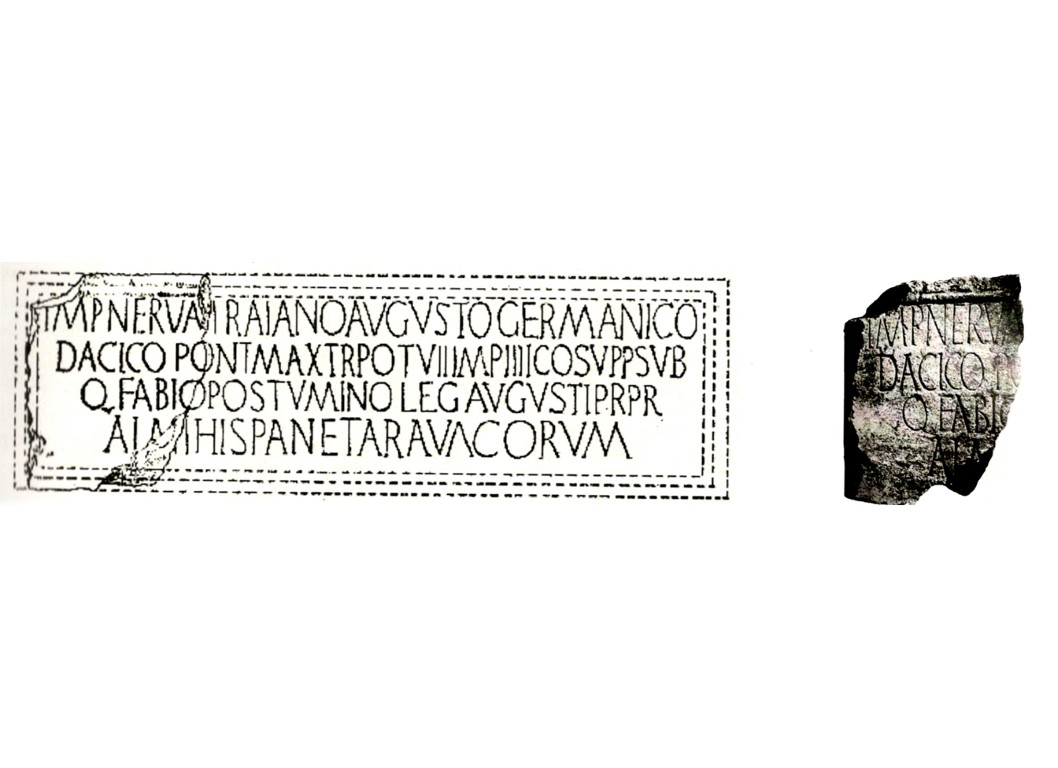
Starting from the analogies with the construction phases of the Danubian limes corroborated with older or newer archaeological discoveries, we can speak of four phases of the Carsium fortress: I- the fortification with wooden constructions, defended by ditches and earthen ramparts with palisades (second half of the 1st century AD) identified only by the tegular material of a cavalry unit (ala Flavia); II- the fortification with stone walls (early 2nd century-3rd century) built in 103 by Emperor Trajan, as shown by the fragment of the inaugural inscription (Photo 1). Remains of rock-cut walls of this phase were identified on the reserved area of the Citadel Hill; III- the fortification built during the reign of Emperor Constantine the Great, whose northern gate was discovered in 2009 at about 300 m from the Danube riverbed (Photo 2). The eastern and western limits of the fortress are not known. Archaeological discoveries on the reserved area have brought to light numerous walls of buildings from this period, including part of a Christian basilica; IV-fortification built during the reign of Emperor Justinian. Most likely, the large enclosure on the reserved area, which overlaps the remains of an older tower, can be dated to this time.
Medieval fortress
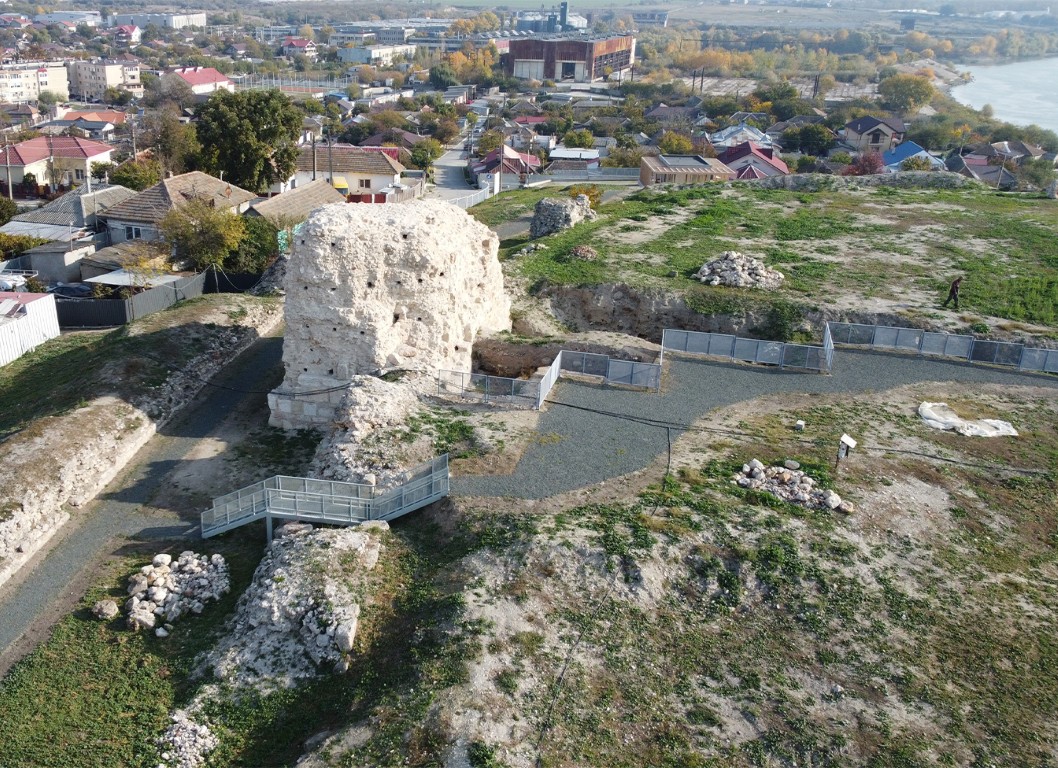
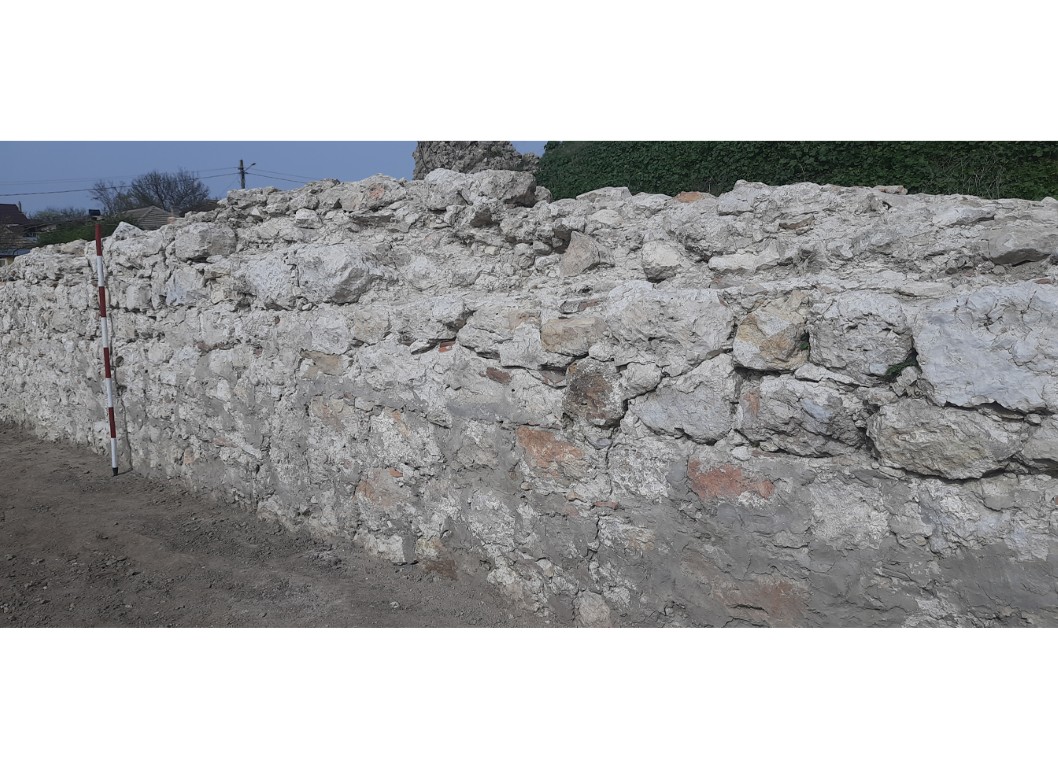
I- The 10th century Byzantine fortress built during the reign of Emperor John Tzimiskes. The smallest area, defended by walls, of which those on the northern side are more visible (Photo 5) on the Fortress Hill (the reserved area) represents, at the current state of knowledge, this fortification.
II-Historical and archaeological data also reveal Genoese rule over the fortress.
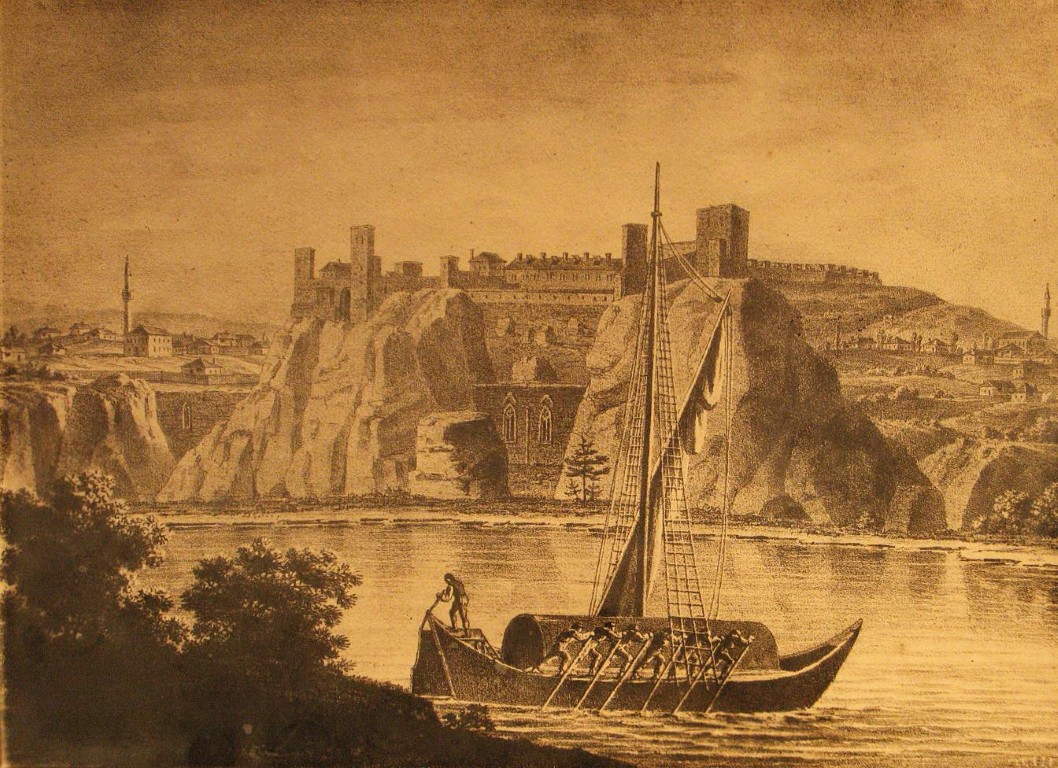
No further details are known about this period. The image of the fortress in 1826 (Photo 6), described by a French officer enlisted in the Russian army, almost two decades before the drawing was made, as Gothic, represents an argument in favor of the Genoese phase.
III-medieval Ottoman fortress (15th-19th centuries)
it is, in fact, the Byzantine fortification integrated, together with the other front walls, into the defensive system. It was repaired after the incursions of the Wallachian rulers on Dobrogea (the attacks of Michael the Brave in early 1595 and Radu Șerbandin in 1603) but especially after the Russian-Turkish wars of 1768-1774, 1806-1812 and 1828-1829.
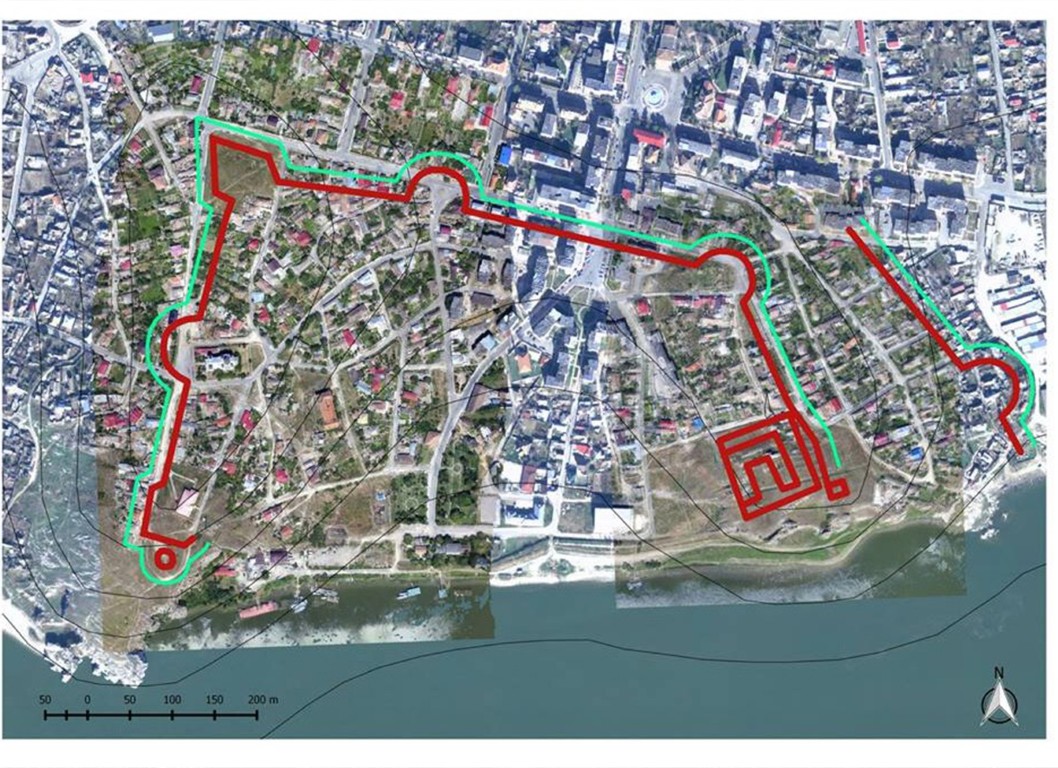
The fortress is repaired every time, and the city is defended by a perimeter wall that encloses a perimeter of about 20-30 ha (Photo 7). By the peace treaty of Adrianople, the Turks are obliged to destroy the fortifications on the right bank of the Danube.
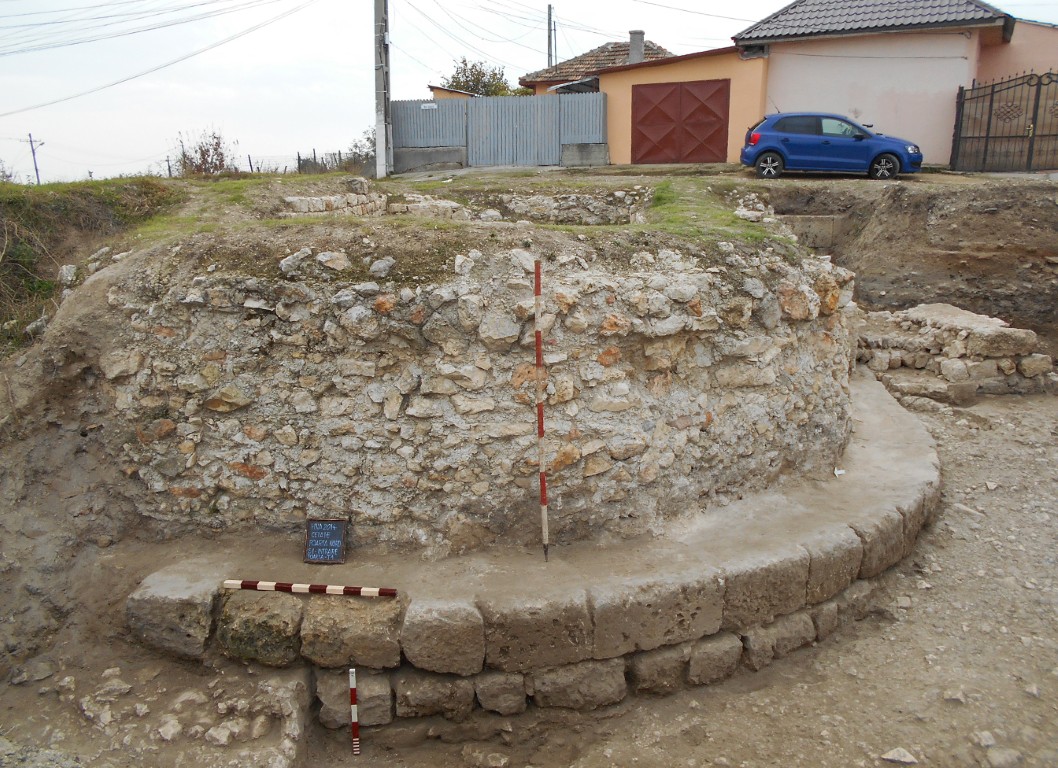
The fortress is abandoned and transformed into a quarry for the modern city that rises above the Ottoman one. Today, four areas of the ancient and medieval fortress are preserved, listed on the List of Historical Monuments: the reserved area at the Danube, improperly registered with the name "Carsium Fortress", the northern gate of the 4th century fortress, at the intersection of Carsium and Unirii streets; the northwestern tower of the medieval fortification at the intersection of Carsium and Lunii streets and the fortification on Dealul Belciug (La Cruce) at the southern end of Venus Street (on the rocky slope of the Danube).
The evolution of the fortress of Hârșova, from the 4th century to the 19th century, is best illustrated by the port facility located on the banks of the Danube (Photo 8). The fortress of Hârșova occupies a spectacular relief, facing the Danube, which is part of the natural and landscape reserve "the canals of the port of Hârșova".